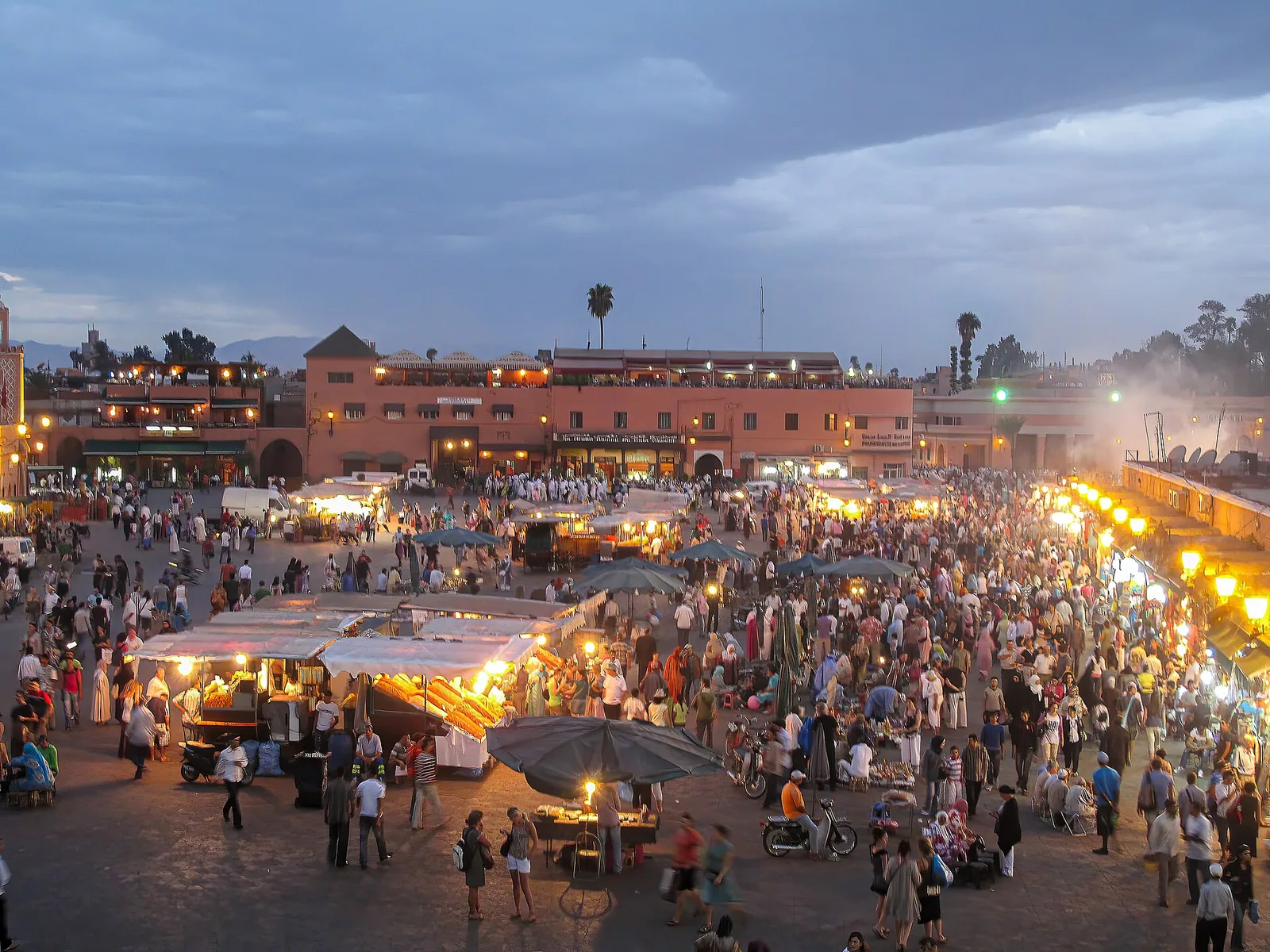
Spring (March–May) and autumn (September–November) are the best all-round times to visit Morocco — warm days, cool evenings and ideal conditions for the medinas, mountains, coast and desert alike.
Season by season
Morocco is a year-round destination, but the experience changes sharply with the calendar and the region. The country packs Atlantic coast, imperial cities, the High Atlas and the Sahara into one trip — and no single month is perfect for all four at once. Basing in Rabat, the capital sits on the temperate Atlantic seaboard, so it stays comfortable across a wider stretch of the year than the inland cities, with fast train links making it an easy springboard to the rest.
- Spring (Mar–May): the sweet spot — wildflowers in the Atlas, warm cities, comfortable desert.
- Summer (Jun–Aug): hot inland (Marrakech and the south can top 40°C); head for Essaouira, Agadir and the mountains.
- Autumn (Sep–Nov): a second peak — stable weather, warm sea, golden desert light.
- Winter (Dec–Feb): mild, sunny cities and prime Sahara season; snow on the Atlas peaks and cold desert nights.
Best time by region
For the Sahara (Merzouga, Erg Chigaga), October to April is the window — summer daytime heat makes the dunes punishing and many camps close. For trekking the High Atlas and summiting Toubkal, April to October is ideal, with winter reserved for those with crampons and a guide.
The Atlantic coast — Rabat, Oualidia, Essaouira, Agadir — is pleasant most of the year but always breezy; July and August are best for the beach. The imperial cities (Rabat, Fes, Meknes, Marrakech) are most comfortable in spring and autumn — and in Rabat the Bouregreg breeze keeps even high summer milder than the baking interior, so the capital reads more 'long season' than most.
Things that move the dates
Ramadan shifts each year (it falls in the late-February-to-March window through the late 2020s) and changes the rhythm of the day — many restaurants adjust hours, though tourist riads and tours run normally. The Gnaoua World Music Festival fills Essaouira in late June, and the Marrakech rose and film festivals draw crowds; book well ahead around these.
Frequently asked
What is the cheapest time to visit Morocco?
Low season is the deep summer (July–August) inland and mid-winter outside the holidays. You'll find the best riad and tour rates in June and November, just outside the two peaks.
When is it too hot in Morocco?
July and August inland — Marrakech, Fes and the Sahara routinely exceed 38–45°C. If you travel then, base yourself on the coast or in the mountains and save the desert for a future trip.
Is December a good time to visit Morocco?
Yes for the cities and the desert — sunny, mild days and few crowds — but pack warm layers: desert nights and Atlas evenings are cold, and the high peaks hold snow.
Planning a trip?
Let us handle the details.
Tell us your dates and style and we'll send a written itinerary and a transparent quote within one working day.
Request an itineraryKeep reading
Planning
Is Morocco Safe to Visit?
Yes — Morocco is one of the safest and most welcoming countries in North Africa for travellers, with a well-established tourism industry. The main day-to-day issues are petty scams and medina hustle, both easily managed — and notably gentler in a refined administrative capital like Rabat than in the high-pressure tourist medinas.
Planning
Morocco Travel Costs & Budget
Morocco can be done on almost any budget. Street food, trains and guesthouses keep costs low; private, riad-based trips with a driver-guide scale with season, group size and standard, and ours are quoted per trip and fixed in writing — ask through the quote form or WhatsApp.