Destinations · 42 curated guides
The best places to visit in Morocco.
Nine destinations cover ninety percent of what travellers come to Morocco for — from Marrakech to the Sahara dunes, Fes to Chefchaouen and the Atlantic coast. Each guide gives you the real number of days, the right time to visit, and a quote on request.
42 destinations
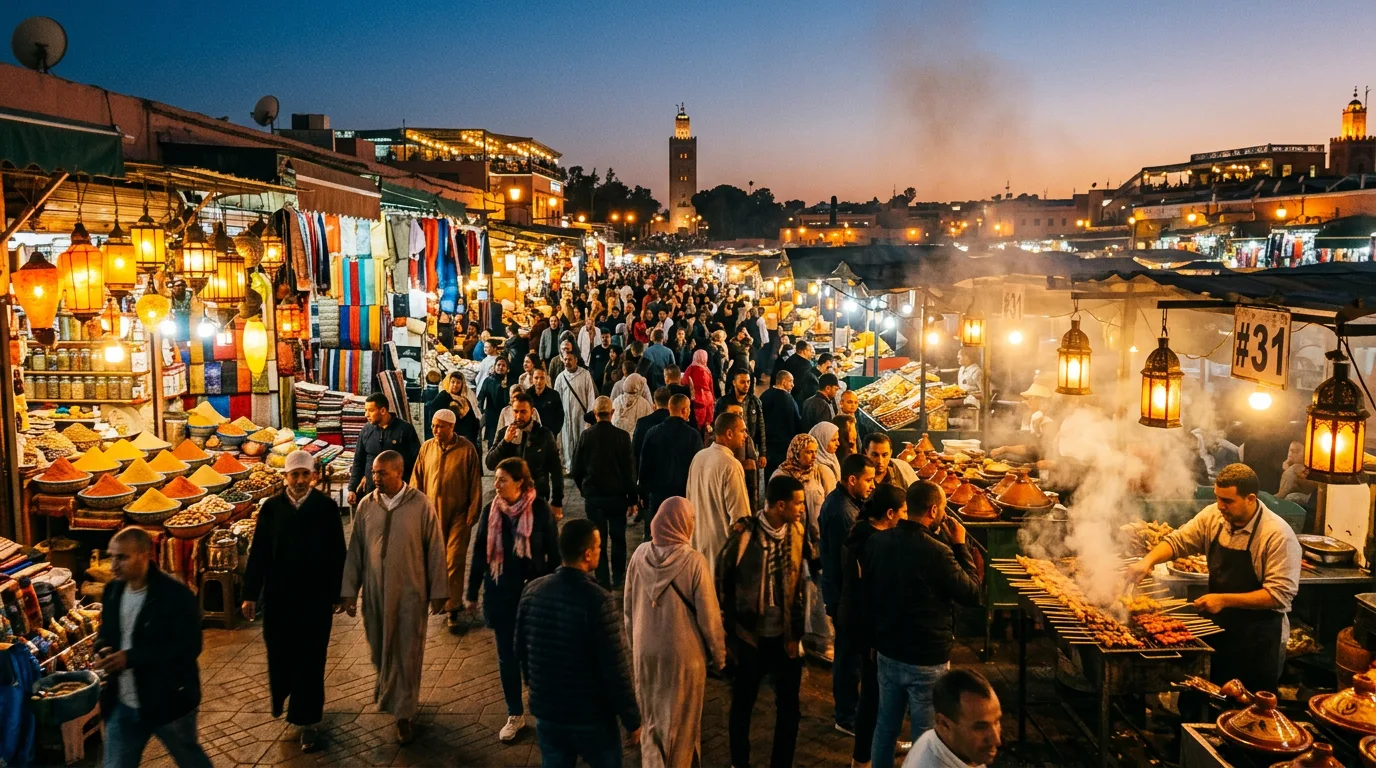
Marrakech
The red city: souks, riads, gardens and the southern counterpoint to Rabat's calm.
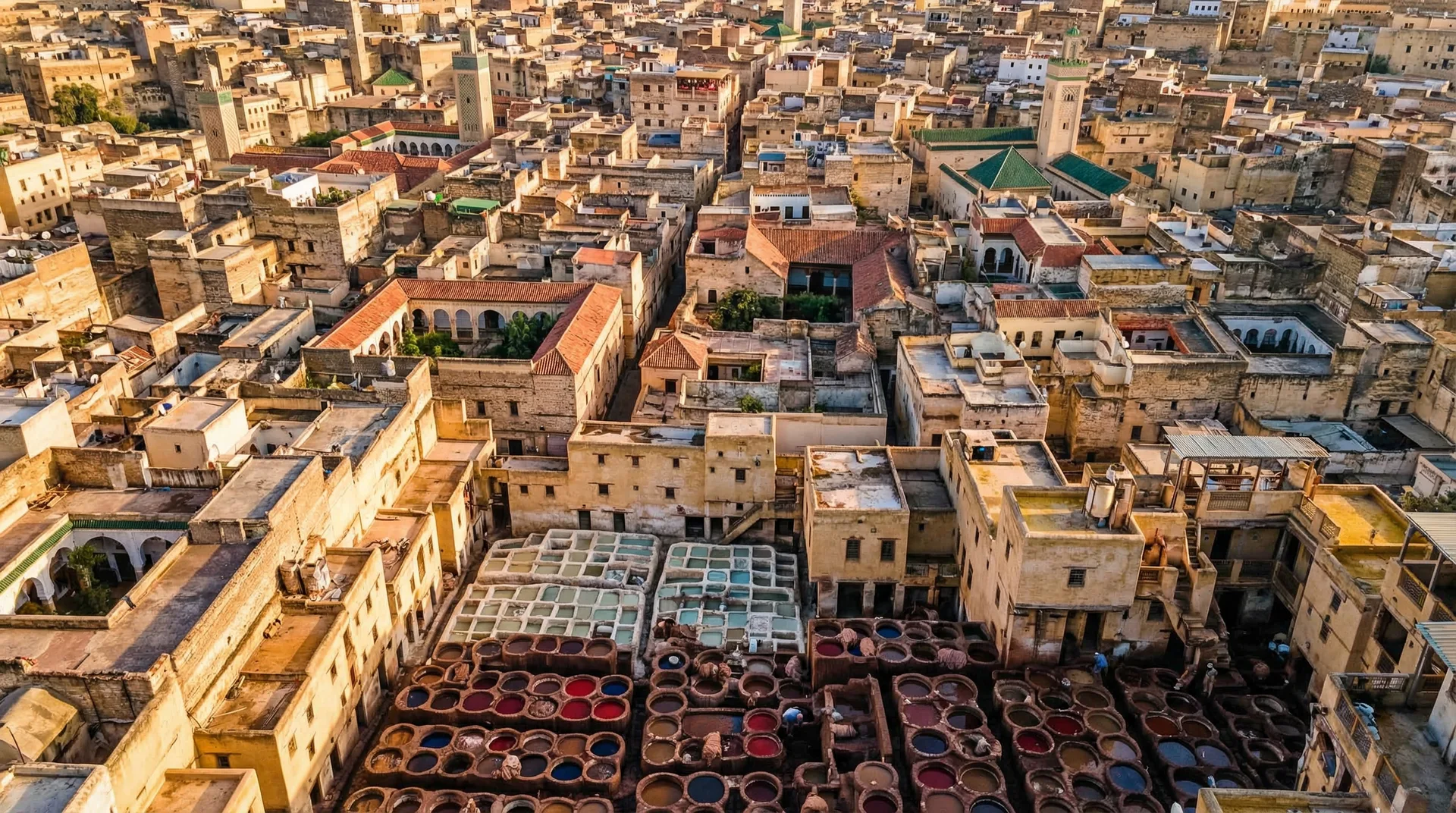
Fes
The world's largest car-free medieval city — Morocco's spiritual capital to Rabat's political one.
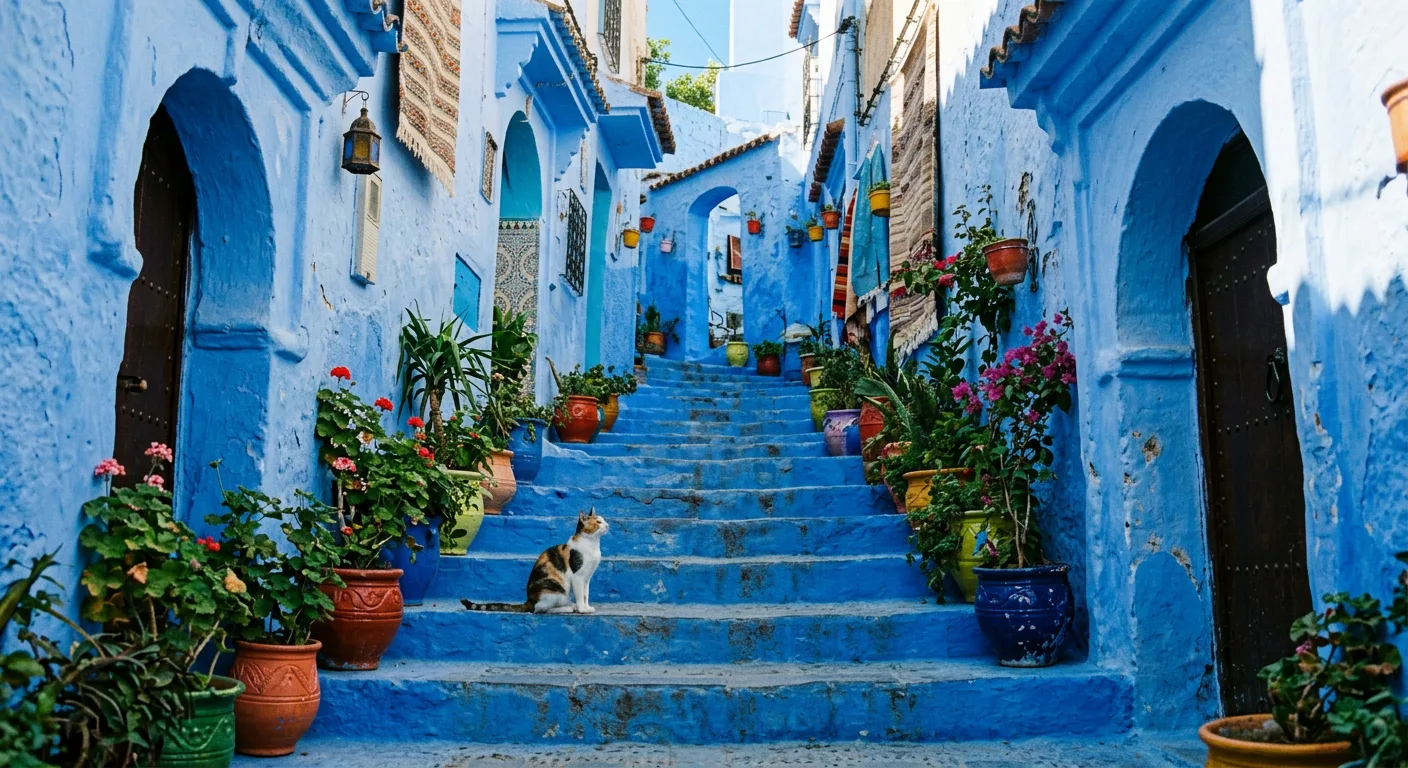
Chefchaouen
Morocco's blue pearl — a 15th-century mountain medina painted in cobalt and lime, deep in the Rif north of the capital.
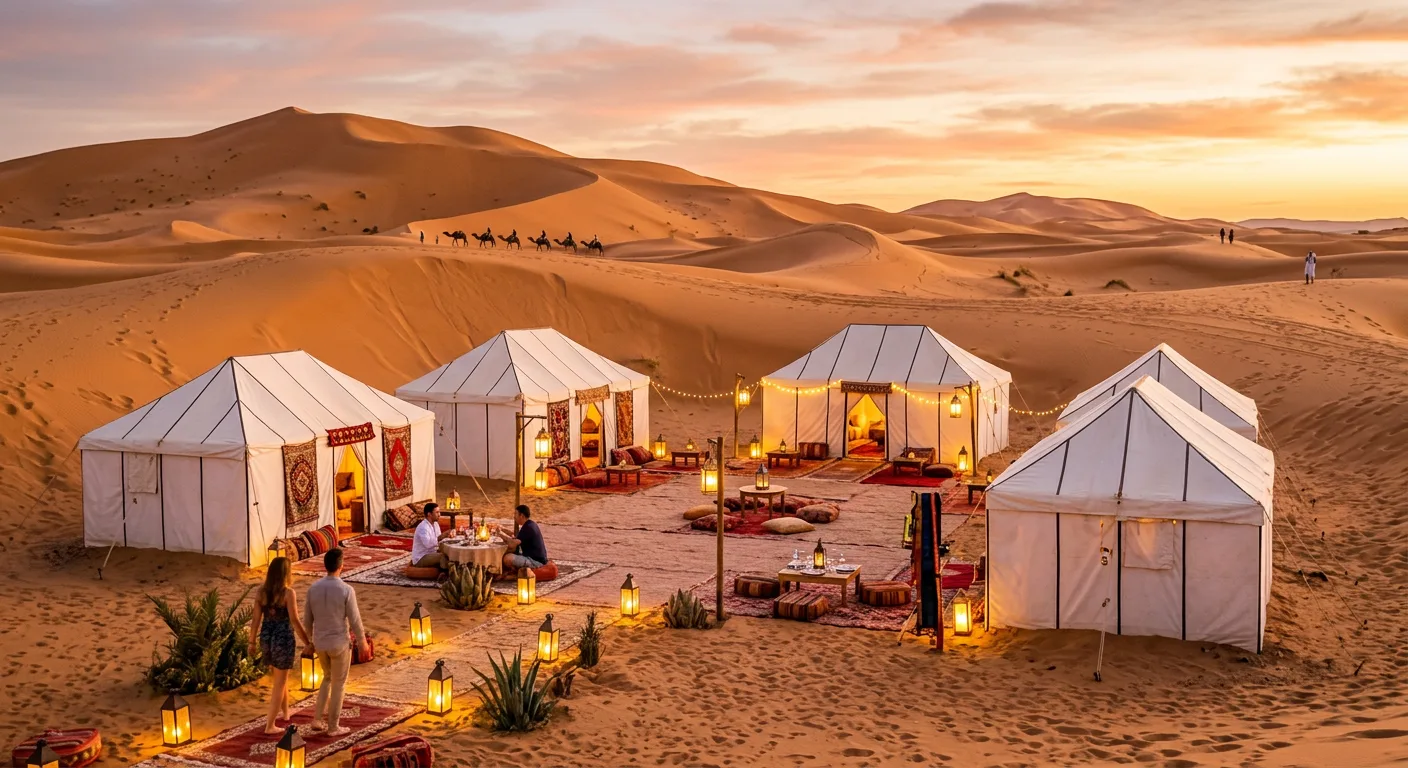
Sahara & Merzouga
Real Sahara: 150m dunes, camel caravans, and luxury camps under more stars than you've ever seen.
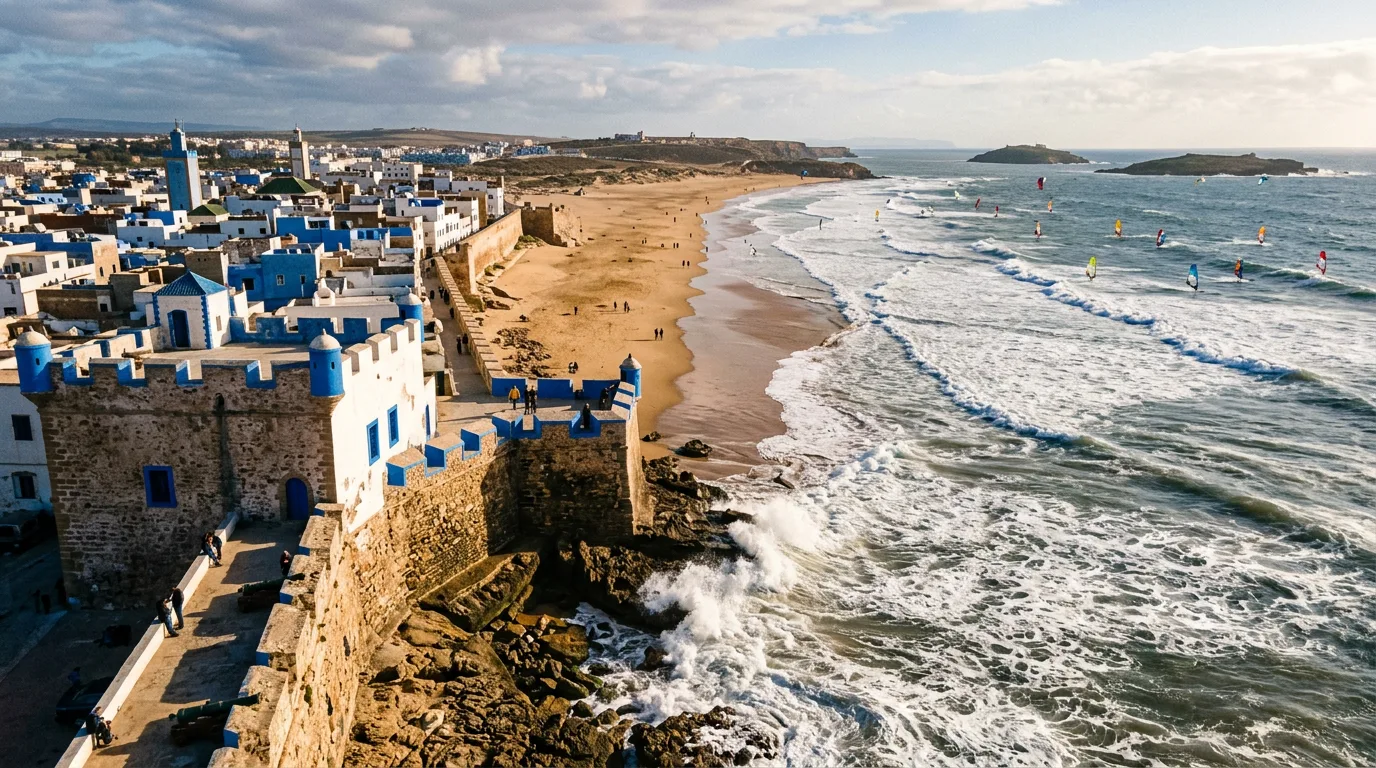
Essaouira
The windy fortress city: ramparts, fishing boats, argan oil and the best seafood in Morocco.
Atlas Mountains
Berber villages, walnut groves and North Africa's highest summit — the great range south of the capital.
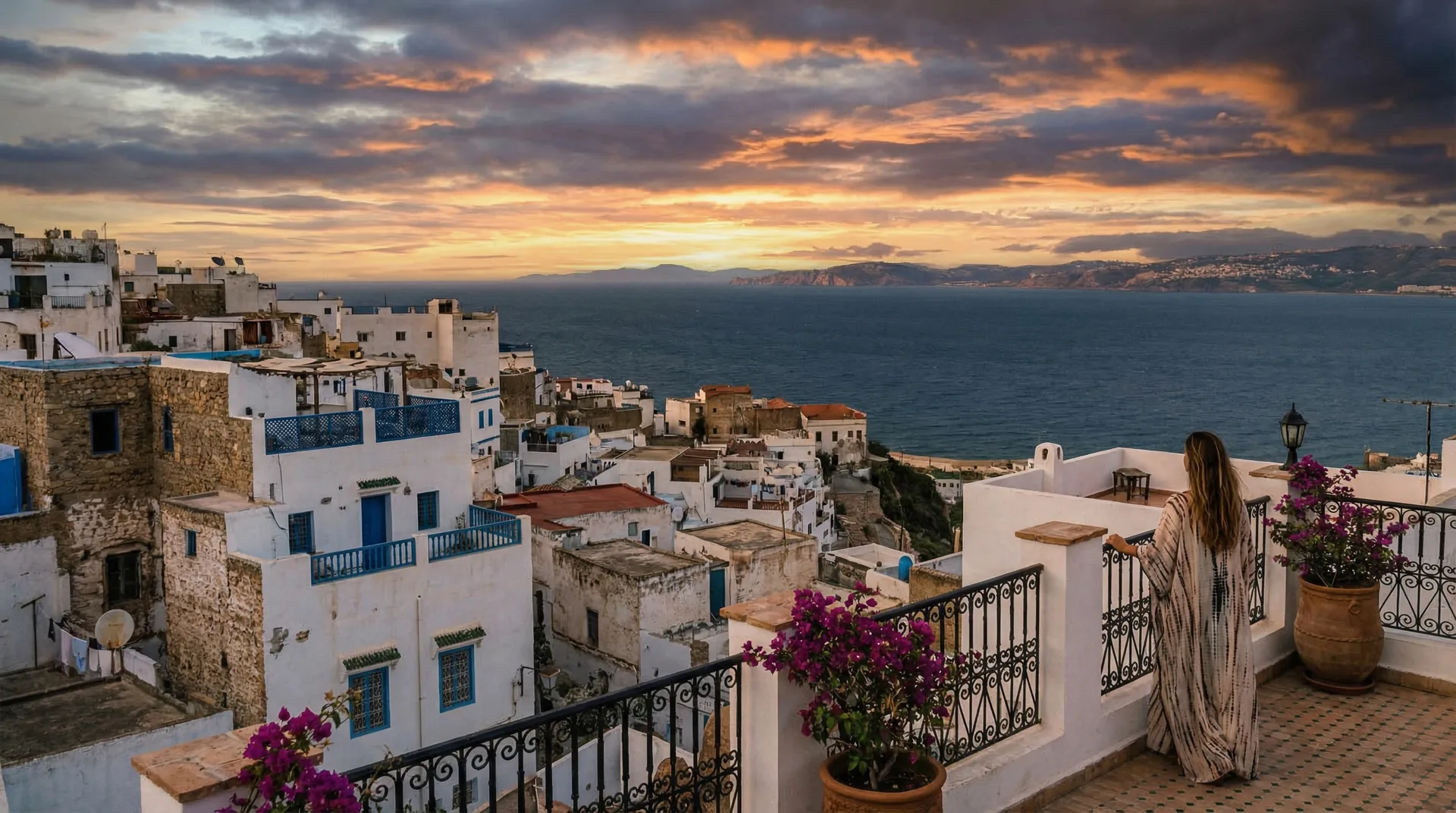
Tangier
Where Africa meets Europe — kasbah, ferry port and the international city of Bowles and Matisse.
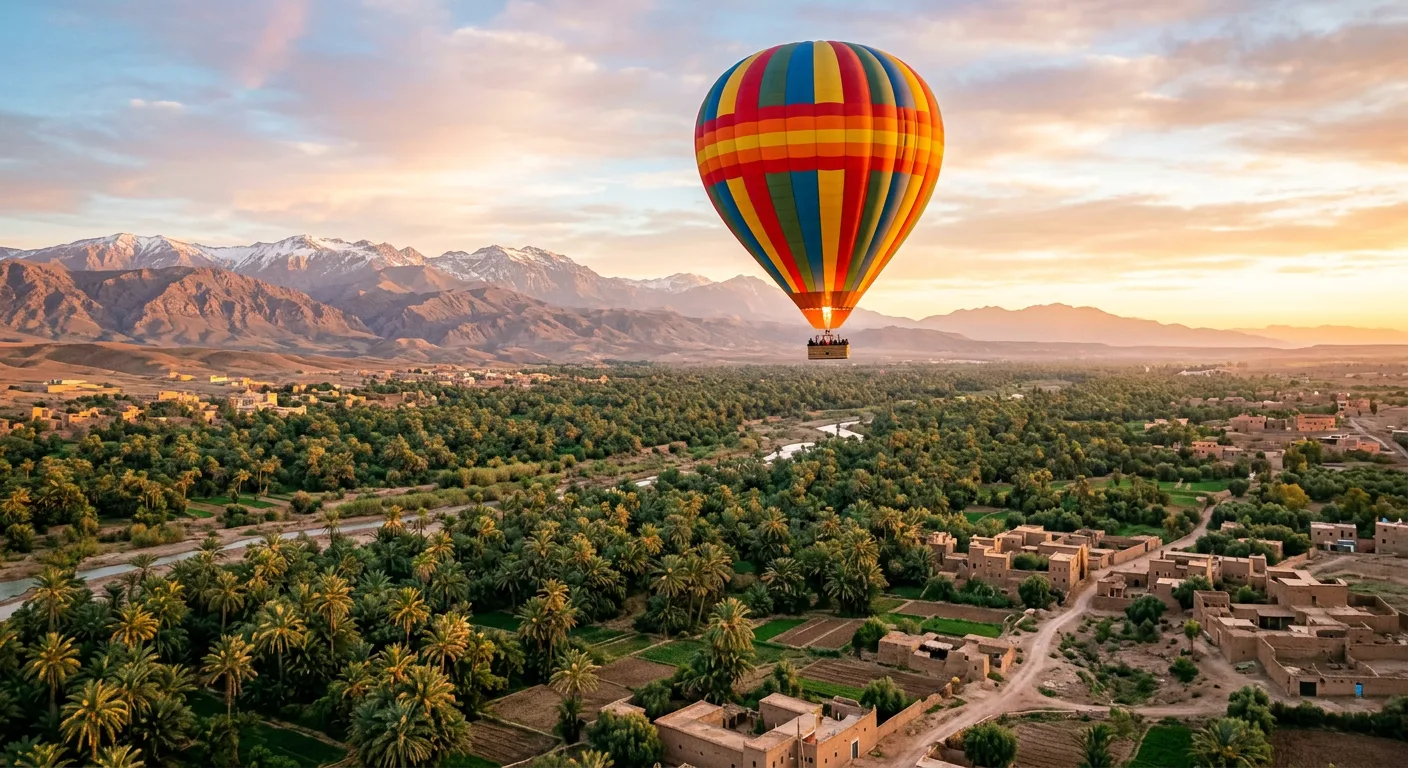
Ouarzazate & Aït Ben Haddou
The Hollywood of Africa: kasbahs, film studios and the gateway to the dunes.
Casablanca
Morocco's economic capital — art deco, the Hassan II Mosque, and Rabat's big-city neighbour an hour down the line.
Rabat
Morocco's refined capital — Hassan Tower, the Udayas kasbah, Chellah and an unhurried medina on the Bouregreg.
Meknes
The quiet imperial city of Moulay Ismail — monumental gates, vast granaries and Roman Volubilis next door.
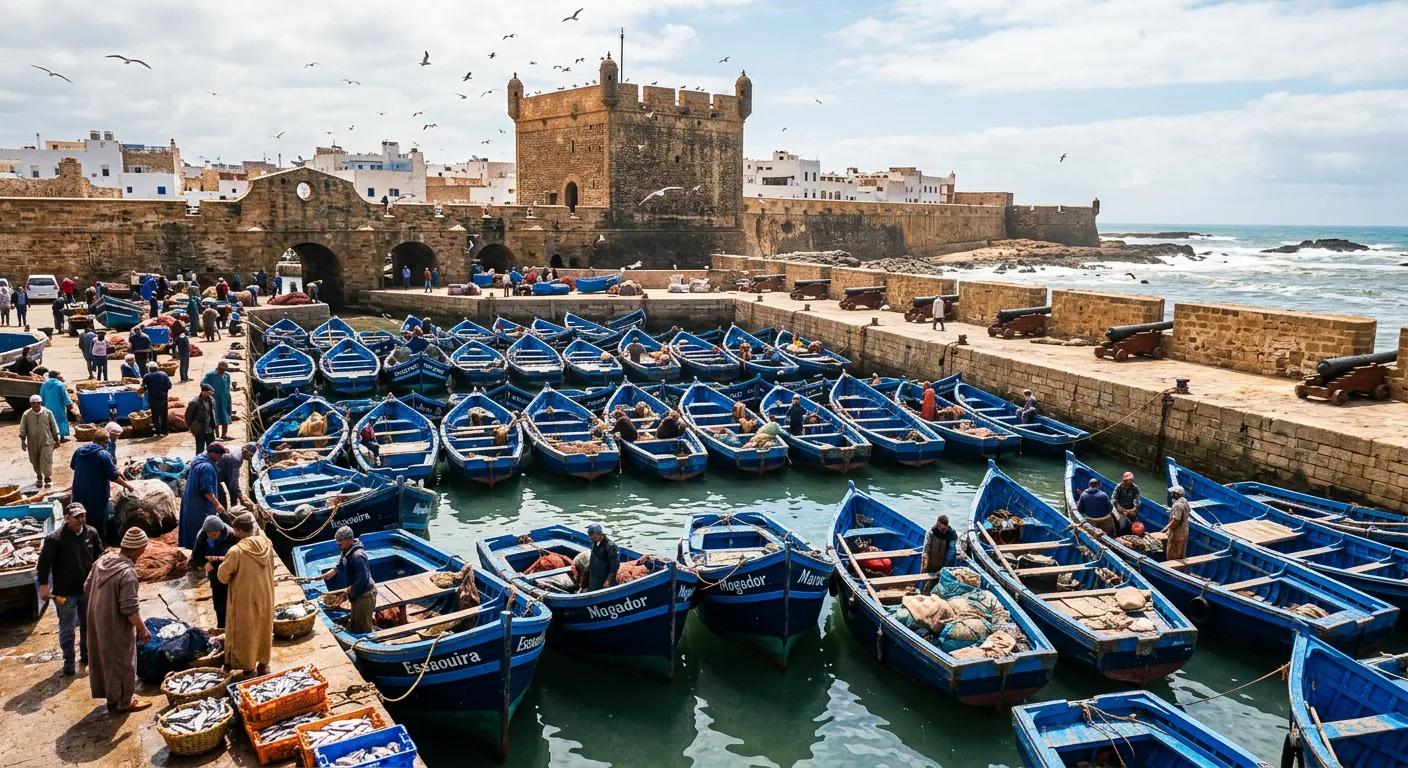
Agadir
Morocco's sunshine beach capital — a long golden bay, modern resorts and the gateway to Paradise Valley and Taghazout.
Dadès & Todra Gorges
Towering red canyons, palm oases and the famous switchback road — the dramatic heart of the desert route.
Ouzoud Falls
Morocco's highest waterfalls — 110 metres of cascades, rainbows and wild Barbary macaques.
Agafay Desert
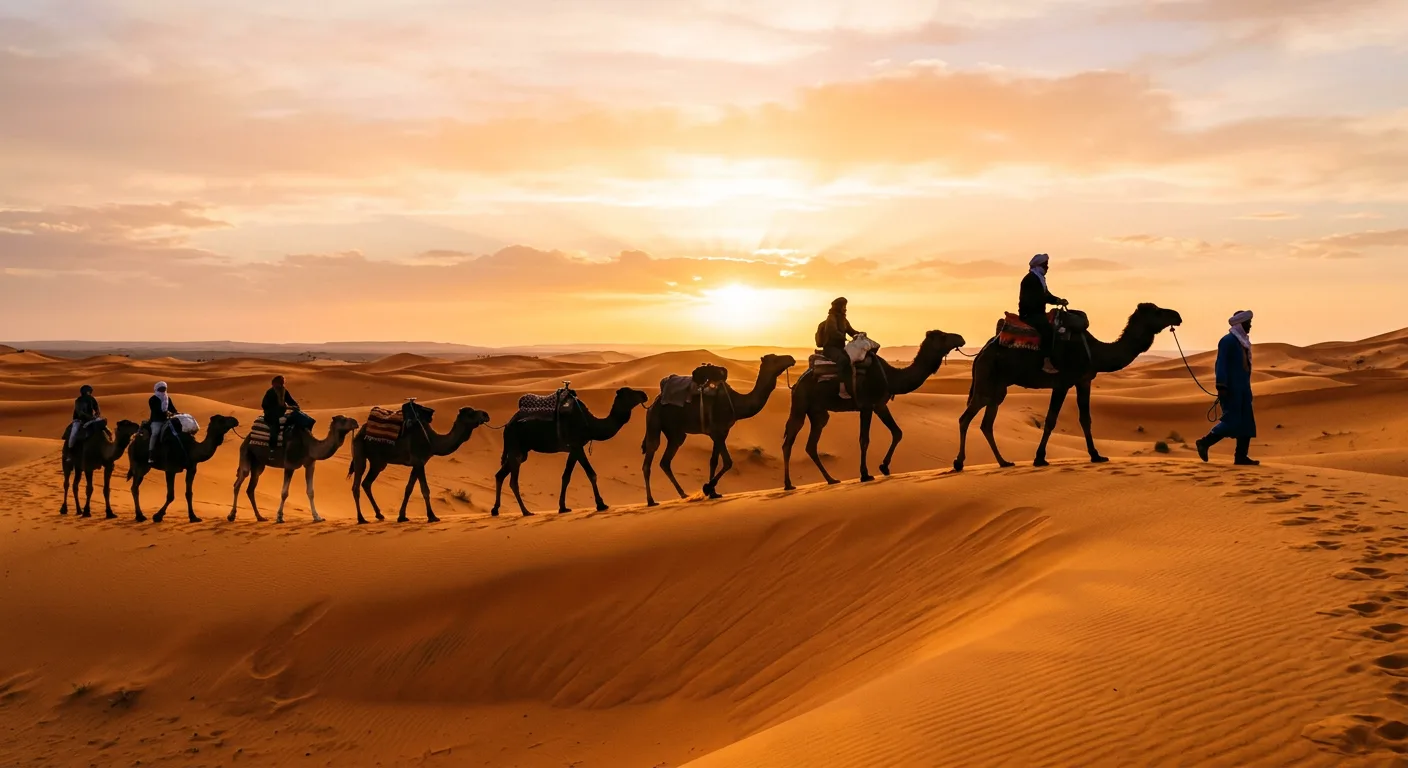
A lunar landscape of rolling hills 40 minutes from Marrakech — luxury camps, camel rides and Atlas sunsets without the long drive.
Ourika Valley
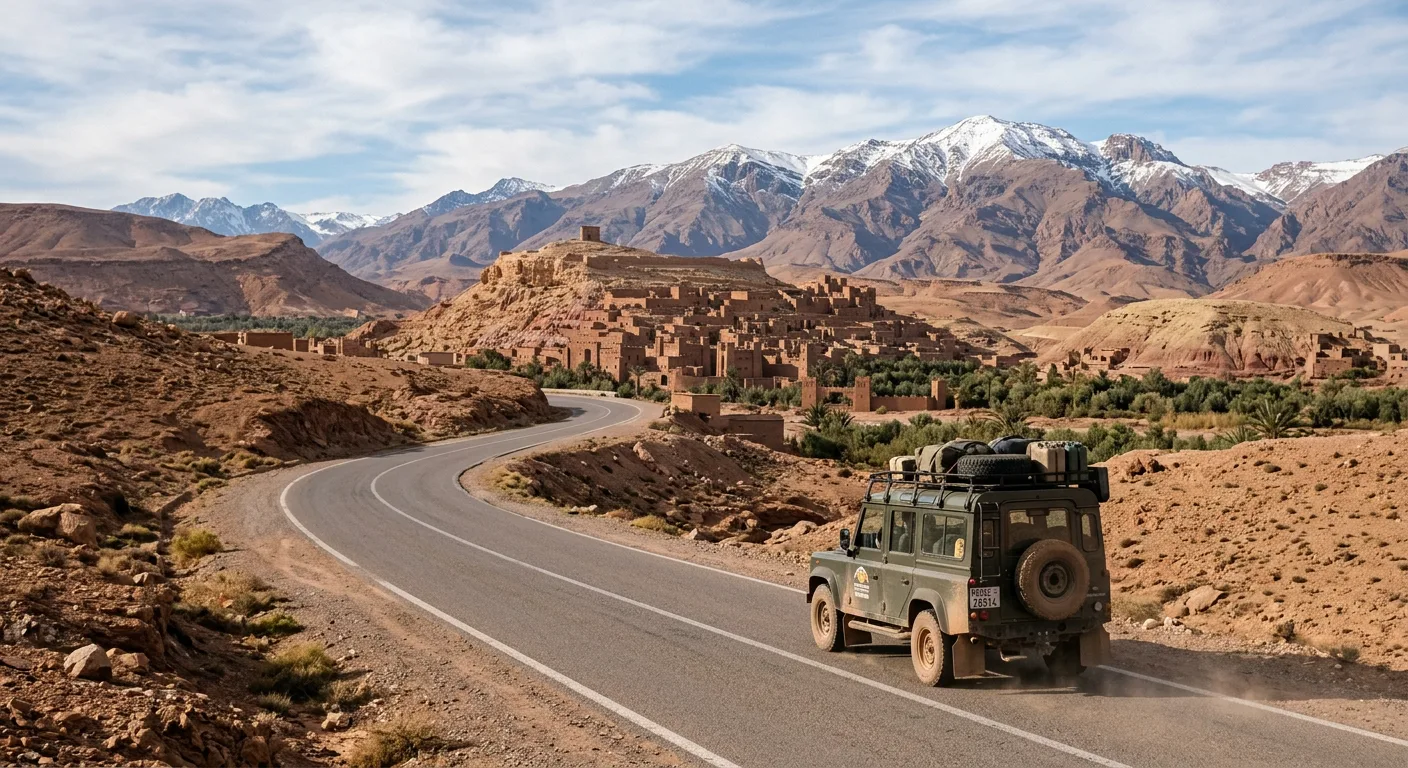
Berber villages, river-bank lunches and seven waterfalls — the greenest, easiest Atlas escape from Marrakech.
Asilah
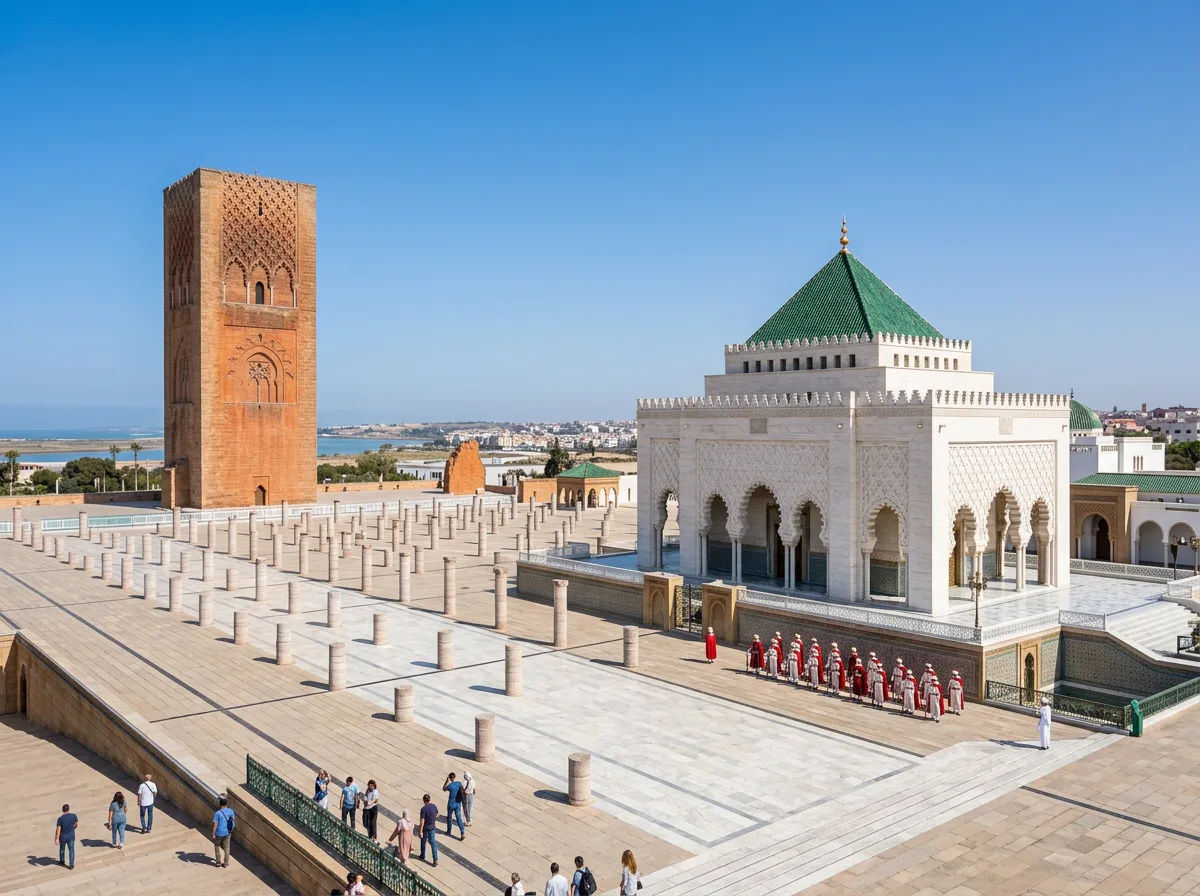
A whitewashed Atlantic art town — Portuguese ramparts, painted murals and a calm, walkable medina near Tangier.
Zagora
Gateway to Erg Chigaga — a palm-lined oasis town at the threshold of the deep Sahara.
Imlil
Imlil is the High Atlas trekking village that puts North Africa's highest summit within two days' walk.
Taroudant
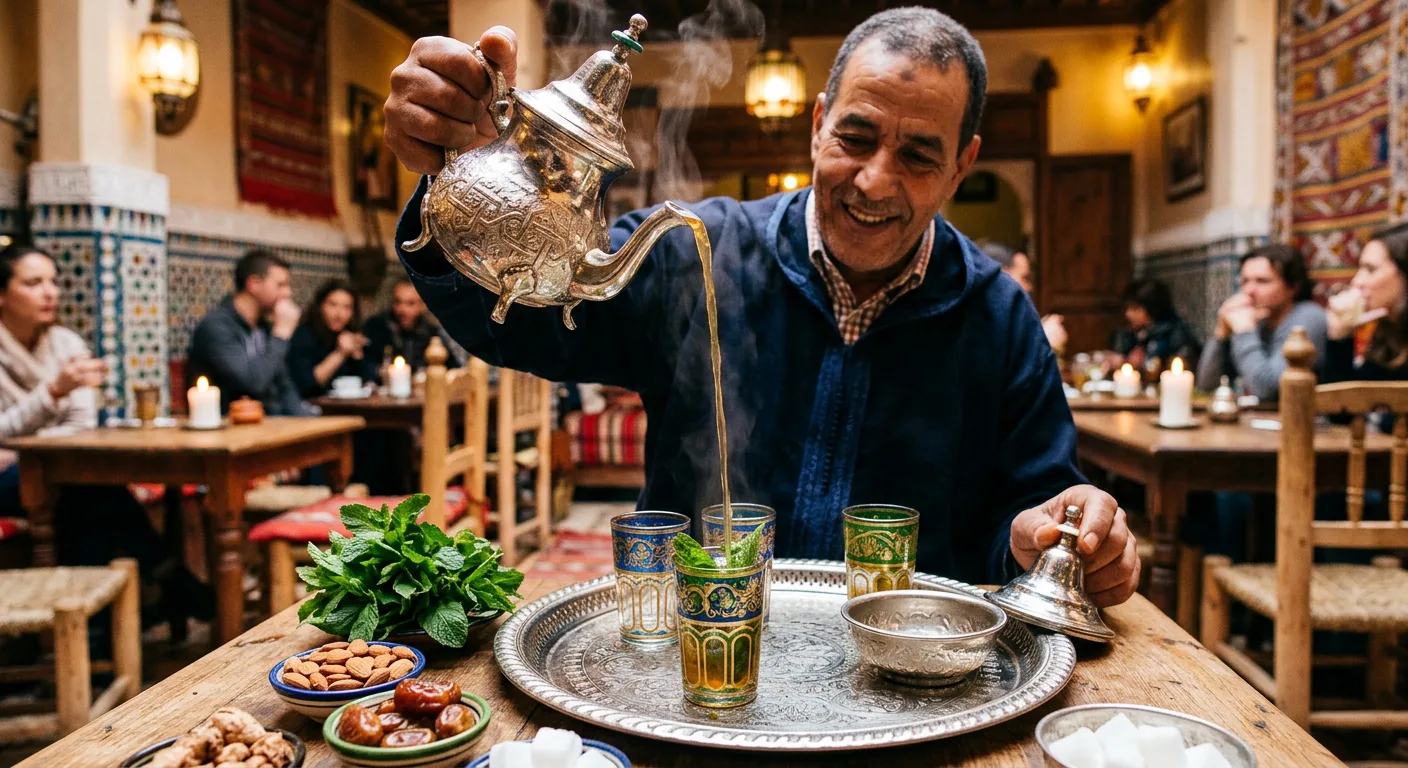
Taroudant is the 'little Marrakech' of the south — a walled Saadian city of ochre ramparts and souks in the Souss plain.
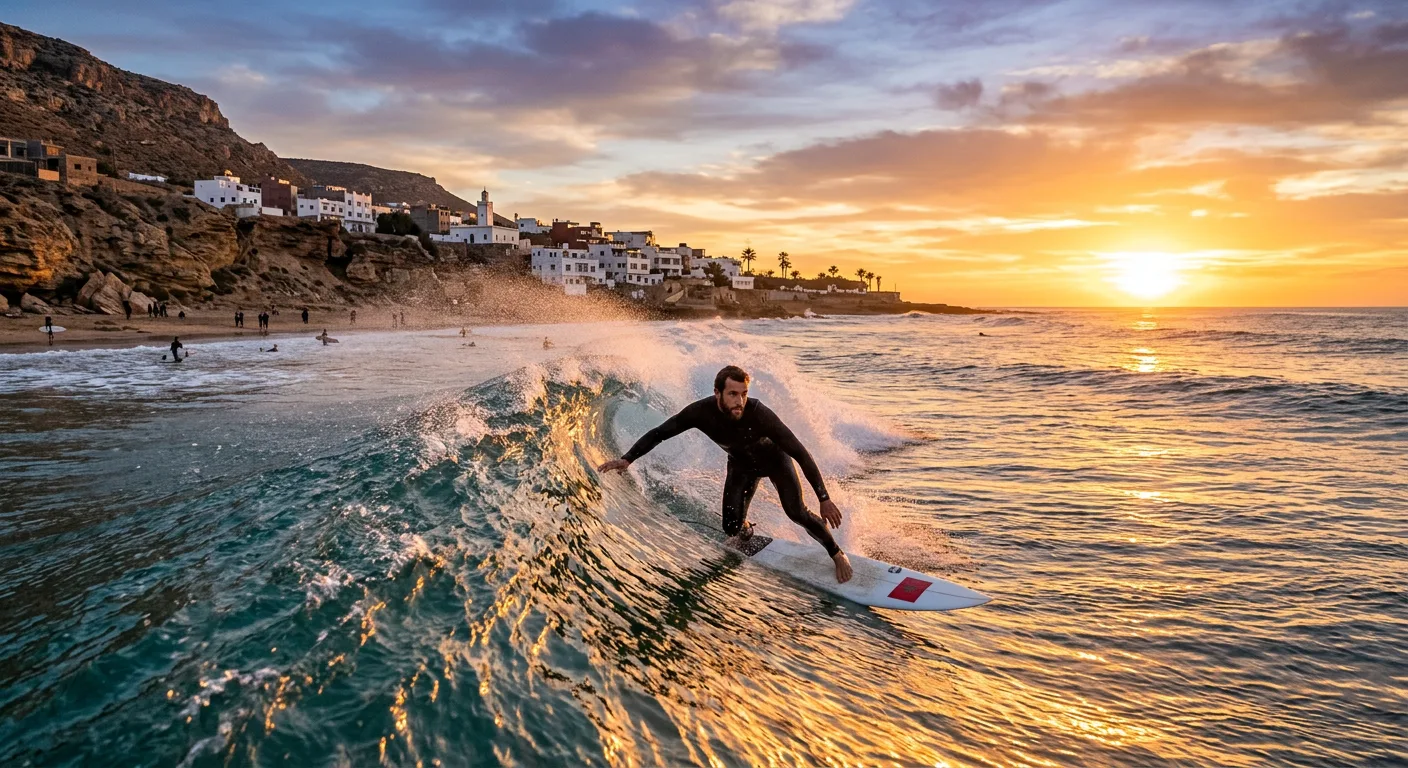
Taghazout
Far down the Atlantic from the capital, Taghazout trades Rabat's monumental calm for point breaks, argan oil and surf-village sunsets north of Agadir.
Ifrane
An easy detour off the capital-to-Fes line, Ifrane is Morocco's 'Little Switzerland' — alpine chalets, cedar forest, snow and wild Barbary macaques.
Dakhla
Same Atlantic as the capital, 1,700 km south: Dakhla is Africa's kitesurf capital — a turquoise Saharan lagoon with wind 300 days a year.
Skoura
Deep beyond the Atlas from the capital, Skoura is the palm oasis east of Ouarzazate — earthen kasbahs and the restored Amerdil, on the banknote.
Tinghir
On a southern loop far from the capital's coast, Tinghir is the Todra valley gateway — a green oasis below the Atlas and base for a dramatic canyon hike.
Oualidia
An easy run down the coast from the capital, Oualidia is Morocco's oyster lagoon — sheltered tidal flats, fresh shellfish and flamingos south of Casablanca.
Volubilis & Moulay Idriss
Within day-trip reach of the capital, Volubilis and Moulay Idriss form Morocco's most layered day — Roman mosaics whose olive port became Rabat itself.
Midelt
The inland midpoint between the imperial cities and the Sahara, Midelt is Morocco's apple town — Atlas crossroads, the Cirque Jaffar and the Moulouya gorges.
Sidi Ifni
Far down the capital's Atlantic coast beyond Agadir, Sidi Ifni is an Art Deco Spanish enclave of sun-bleached colonial streets, surf and the Legzira sea arches.
El Jadida
El Jadida is Morocco's UNESCO Portuguese city — a 16th-century Atlantic fortress with a miraculous cistern, an easy run down the coast from the capital.
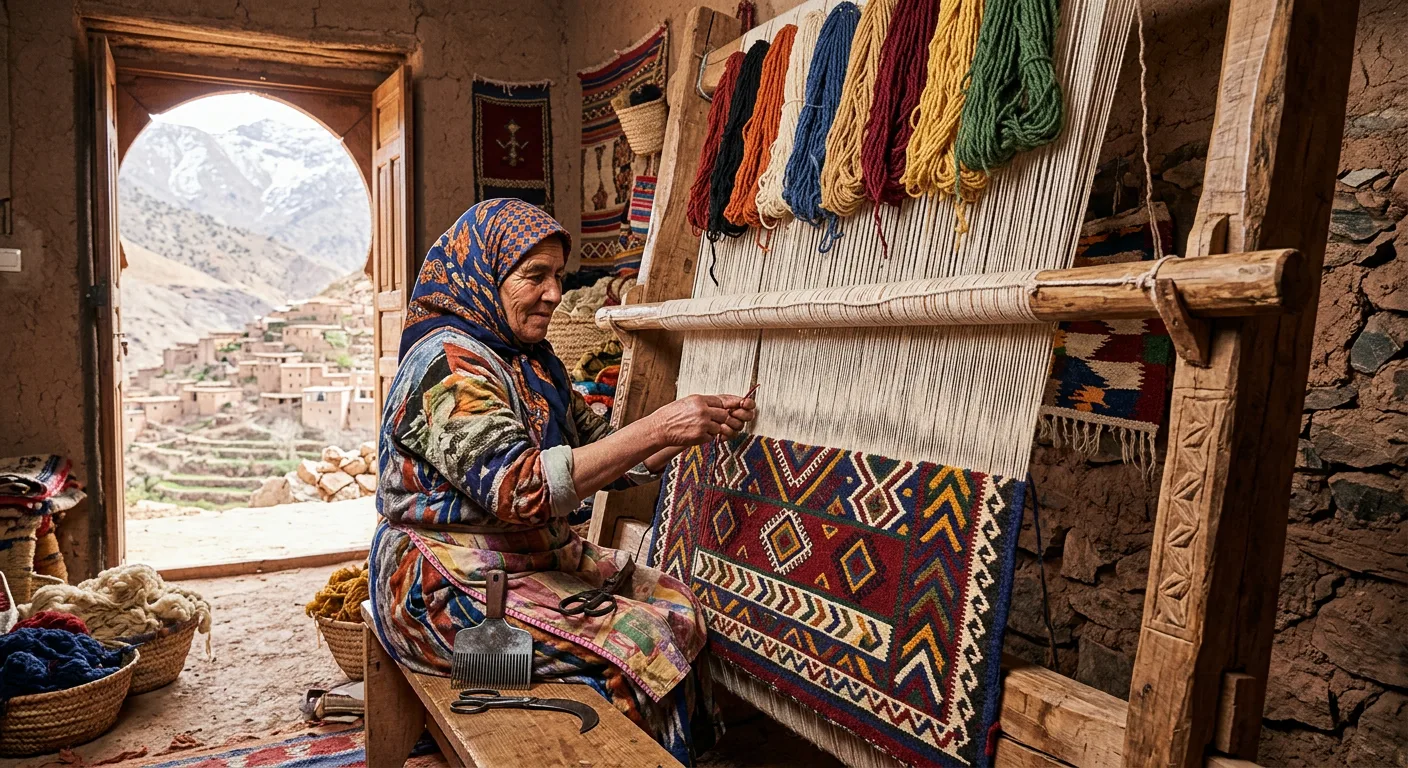
Azrou
Just off the capital-to-Fes corridor, Azrou is the Middle Atlas cedar village — Morocco's surest wild Barbary macaques beneath ancient Cedrus atlantica.
Moulay Bousselham
Moulay Bousselham is the capital's nearest great birdwatching lagoon — the Merja Zerga wetland draws tens of thousands of wintering waterbirds to a sleepy fishing village just up the coast from Rabat.
Tétouan
A northern excursion from the capital via Tangier, Tétouan is Morocco's Andalusian city — a UNESCO medina of whitewashed lanes and Iberian heritage.
Tafraout
A dedicated Anti-Atlas leg far from the capital's coast, Tafraout is the pink-granite oasis — painted boulders, almond blossom and the Ameln valley peaks.
Mirleft
Far down the capital's Atlantic coast past Agadir, Mirleft is Morocco's finest undeveloped cliff-and-cove village — wild surf between Tiznit and Sidi Ifni.
Larache
Up the coast from the capital toward Tangier, Larache is a quiet Spanish-colonial port above the Loukos estuary, beside the Roman ruins of Lixus.
Béni Mellal
Inland from the capital's coast on the Marrakech–Fes road, Béni Mellal opens the Ain Asserdoun springs, the Bin el-Ouidane reservoir and the cedar highlands.
Rissani
At the deep-south end of a grand loop from the capital, Rissani is the Tafilalt's ancient heart — Alaouite cradle, Merzouga gateway and a great Thursday souk.
M'Hamid el Ghizlane
As far from the capital's calm as Morocco reaches, M'Hamid el Ghizlane is the road's end — the last town before Erg Chigaga and the deepest Sahara.
Aït Bougmez Valley
A remote High Atlas world away from the capital's coast, Aït Bougmez is Morocco's 'Happy Valley' — terraced villages, wildflower meadows and the M'Goun trailhead.
Akchour
On a northern leg far from the capital's coast, Akchour is the Rif's finest day hike — emerald falls, the God's Bridge arch and a forested gorge near Chefchaouen.
Saïdia
A different sea from the capital's Atlantic, Saïdia is Morocco's Mediterranean Blue Flag resort — 14 km of sand on the Algerian border and the country's finest swimming.
Frequently asked
Frequently asked questions about Morocco destinations.
Which Moroccan destinations are easiest to reach from Rabat?
Rabat is Morocco's capital, on the Atlantic coast and on the country's main north–south transport spine. Casablanca lies a short hop south and is quickly reached by frequent trains, while Salé sits directly across the Bou Regreg river. The imperial city of Meknes — with the nearby Roman ruins of Volubilis and the hilltown of Moulay Idriss — is an easy inland trip, and Fes, Tangier and Marrakech all connect to Rabat by train or road.
Can I do a day trip to Casablanca, Meknes or Volubilis from Rabat?
Yes. Casablanca is close enough for a comfortable day trip, with fast, frequent trains between the two cities, making the Hassan II Mosque and the city centre easy to see and return the same day. Meknes is also within day-trip range inland, and it pairs naturally with the Roman ruins of Volubilis and the hilltown of Moulay Idriss, which sit a short drive beyond Meknes.
How many days should I spend in Rabat and along the Atlantic coast?
Rabat's main sights — the Kasbah of the Udayas, the Hassan Tower and Mausoleum of Mohammed V, the medina and Chellah — fit comfortably into one full day, with a second day for a relaxed pace, Salé across the river, or the coast. To extend along the Atlantic, add time for Casablanca to the south and the seaside towns nearby; a coastal-and-capital itinerary of two to four days works well.
How do I travel between Rabat and the other imperial cities?
Rabat is one of Morocco's four imperial cities, alongside Fes, Meknes and Marrakech, and it is well connected to all of them. Trains run frequently north toward Meknes, Fes and Tangier, and south toward Casablanca and Marrakech, while roads link the same routes. For Volubilis and Moulay Idriss, which have no train station, travel via Meknes by road.
When is the best time of year to visit Rabat and the Atlantic coast?
Spring (roughly March to May) and autumn (September to November) are the most pleasant, with mild, comfortable days for sightseeing in the capital. Rabat's coastal position keeps summers milder than the Moroccan interior, though it can be humid, and winters are cool and wetter on the Atlantic. The shoulder seasons suit most capital-and-coast itineraries best.