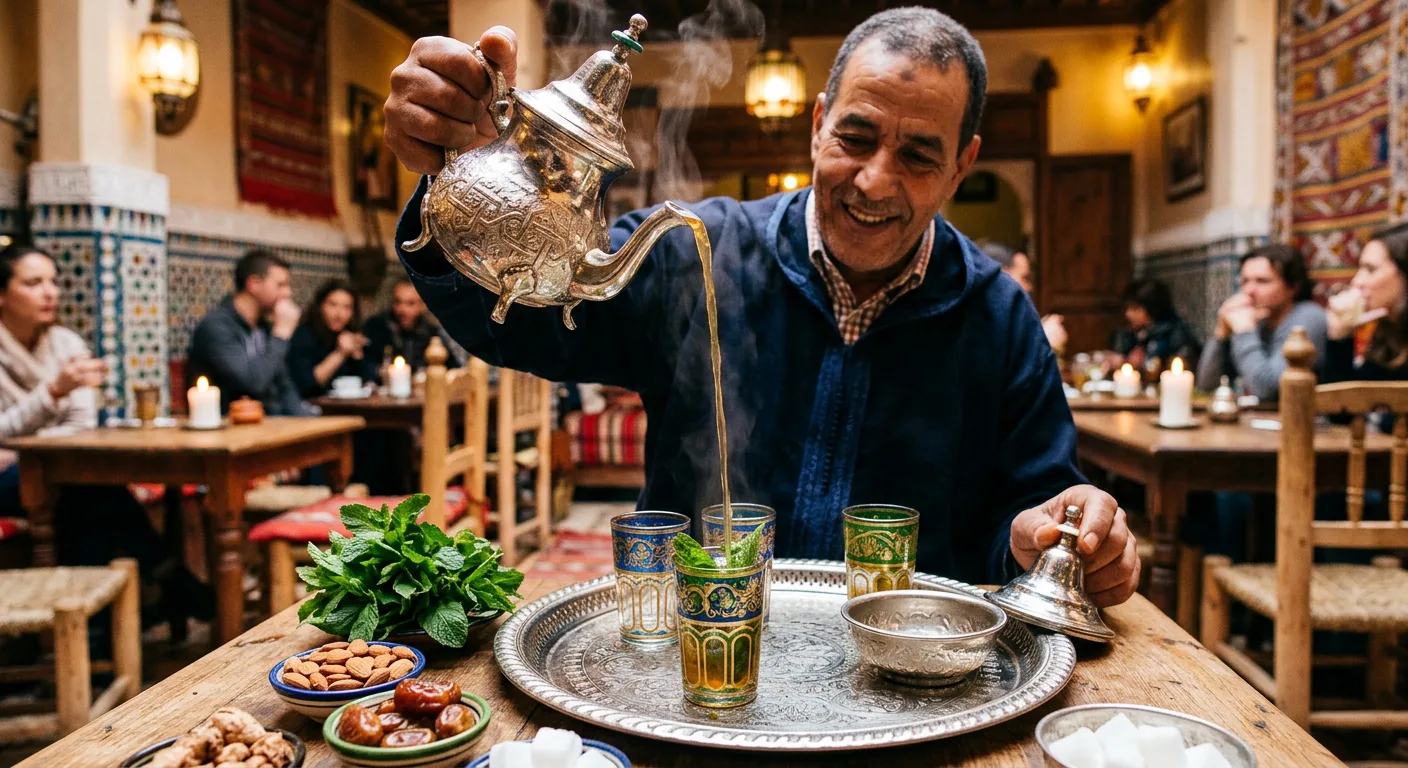
Rabat's calendar is shaped by three forces: the Islamic lunar calendar (Ramadan and Eid shift by roughly eleven days each year), the gentle Atlantic seasons, and a confident cultural programme that has made the capital one of Morocco's liveliest cities for live music and the arts. Timing a visit around a major event turns a good trip into a memorable one.
January – March: the quiet season
The first quarter is Rabat's quietest period — ideal for unhurried walks through the medina, the kasbah and Chellah, and for private tours without crowds. When Ramadan falls in late winter or early spring, the capital's evenings come alive after sunset — packed cafés, lit-up streets and the communal warmth of iftar. Book accommodation ahead during Ramadan as domestic travel peaks.
April – May: jazz among the ruins
Spring brings Jazz au Chellah, one of Rabat's most beloved events: evenings of jazz and Moroccan-fusion concerts staged within the Roman ruins and Merinid necropolis of Chellah, the music drifting up among the columns and the stork nests as the light fades. It pairs European and Moroccan musicians and is the most atmospheric live music the capital offers.
Spring is also Rabat at its loveliest — Chellah green and full of nesting storks, the gardens in bloom and the Atlantic mild. A fine time to combine a festival evening with the city's monuments. See our Rabat destination guide.
June: Mawazine
June belongs to Mawazine — Rhythms of the World, one of the largest music festivals anywhere. For around a week, the capital fills with concerts across multiple stages — international headliners, Moroccan stars and artists from across Africa and the Arab world. Many stages are free, including the huge open-air shows on the OLM Souissi and Nahda grounds, while marquee performances at the Bouregreg site are ticketed. The whole city lifts; book accommodation well in advance.
July – August: summer by the Atlantic
Rabat's summers are tempered by the ocean breeze, far gentler than the inland cities. The seafront and beaches below the kasbah are at their liveliest, and the riverside cafés stay busy into the warm evenings. Up the coast, the small Atlantic town of Asilah holds its long-running arts festival in summer — muralists paint the medina walls and free concerts fill the ramparts — an easy add-on for travellers heading north.
September – October: folklore and the cultural season
As temperatures settle into their most comfortable, the capital's cultural season picks up. The National Folklore Festival and various heritage events bring folk troupes, tbourida (horse fantasia) displays and traditional music to Rabat and Salé from across Morocco. Autumn light over the Bouregreg and Chellah is superb, and the crowds of summer have thinned.
November – December: Visa for Music and year's end
In November, Rabat hosts Visa for Music, a professional festival and showcase of music from Africa and the Middle East — industry sessions by day and public concerts by night across the city's venues, spotlighting emerging artists. It has made the capital a hub for the continent's music scene.
December is quiet and mild on the coast — a fine time for the monuments and museums without crowds, with the medina and riverside cafés cosy in the cooler evenings. Ask us about timing a trip around a festival.
Frequently asked
What is the biggest festival in Rabat?
Mawazine — Rhythms of the World — is one of the largest music festivals on the planet, held in Rabat each year (typically June). It spreads free and ticketed concerts across stages in the capital, from international headliners to Moroccan and African artists, drawing huge crowds over a week.
What is Jazz au Chellah?
Jazz au Chellah is a much-loved festival that stages jazz and fusion concerts among the Roman ruins and Merinid necropolis of Chellah, usually in spring. The setting — music at dusk amid columns and nesting storks — is one of the most atmospheric live-music experiences in Morocco.
Can I attend festivals in Rabat as a tourist?
Yes — most are open to all. Mawazine has many free stages alongside ticketed headline concerts; Jazz au Chellah and Visa for Music sell tickets to the public. Festival weeks lift the whole city, so even without tickets the atmosphere is worth experiencing.
How does Ramadan affect a visit to Rabat?
Ramadan brings a different but rewarding atmosphere: the medina is quieter by day and lively after iftar (the sunset meal), with packed cafés and a festive feel. Most tourist restaurants stay open; some local eateries close until dusk. Sights, the tram and tours run normally. It is a fascinating time to be in the capital.
When is the best time to visit Rabat for events?
Late spring to early summer is the cultural peak — Jazz au Chellah in spring and Mawazine in June — with mild Atlantic weather. Autumn brings Visa for Music and pleasant temperatures. The capital's seafront and gardens are at their best either side of summer.
What is Visa for Music?
Visa for Music is an annual professional festival and showcase of music from Africa and the Middle East, held in Rabat (usually November). It mixes industry conference sessions by day with public concerts by night across city venues, spotlighting emerging African and Arab artists.
Travel with purpose
Let us time your Rabat trip around a festival you'll never forget.
Rabat Tours builds private itineraries around festival dates — from a Jazz au Chellah evening to a Mawazine week — with the right riad and tickets arranged in advance.
Request an itinerary