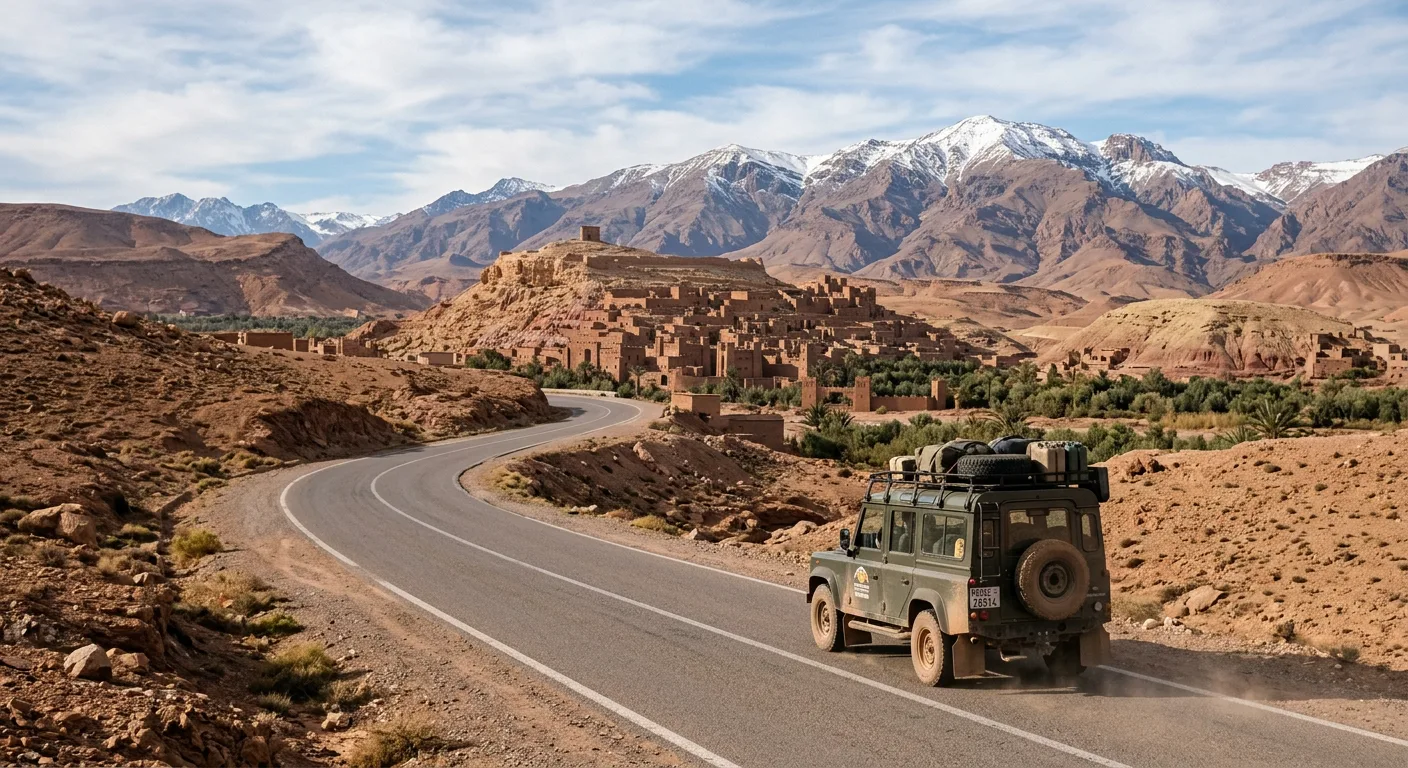
Rabat is the rare Moroccan city where the easiest way to get around is also the most pleasant — and where renting a car is usually unnecessary. The capital is compact and walkable, a modern tram links it with Salé, and it sits at the heart of the country's fast rail network. Here is what we tell guests who ask how to move around Rabat and Morocco.
Rabat as a rail hub
Rabat sits on Morocco's main railway, served by frequent ONCF trains and the high-speed Al Boraq line. From Rabat Ville station, in the heart of the Ville Nouvelle, Casablanca is under an hour away, Meknès and Fes around two to 2.5 hours, and the network continues to Marrakech and Tangier. Trains are punctual, comfortable, air-conditioned and cheap — which is exactly why we recommend basing a trip in Rabat and day-tripping out by rail rather than packing up every night. See our Rabat-based itineraries for how this works in practice.
The tram, taxis and walking
Within Rabat, you rarely need more than your feet and the occasional taxi. The medina, the Kasbah of the Udayas, the Hassan Tower and the riverside are all walkable. Two tram lines glide across the city and over the bridge to Salé — modern, cheap and easy: buy a ticket from the platform machine. Petit taxis (Rabat's are blue) are metered; ask for le compteur or agree the fare first, and short hops cost a dirham or two. For the river crossing to Salé, the traditional rowing boats are a charming alternative to the tram.
Do you need to rent a car?
For a Rabat-focused trip, almost certainly not. Parking in the city is tight, the medina is car-free, and the train reaches the places most visitors want to see faster than driving would. Where a car earns its place is for destinations off the rail line — the Meknès to Volubilis leg, for instance, or rural drives — and even then a private driver is usually the better answer. If you do rent, the autoroutes linking Rabat, Casablanca, Fes and Tangier are excellent: well-surfaced, tolled and clearly signposted.
If you do drive: the essentials
A valid home licence suffices for most nationalities; keep your passport, rental contract and insurance in the car. Speed limits run 40–60 km/h in towns, 100 km/h on open roads and 120 km/h on the autoroutes, and speed checks are common — fines are paid in cash dirhams on the spot. Morocco has a zero-tolerance drink-driving law (0.0 g/L). Park outside the medina in a supervised lot (a gardien charges 10–20 MAD) and walk in. Car hire from the international agencies runs roughly US$25–40 per day for a small manual.
Why many of our guests choose a private driver
We are not unbiased — we arrange private driver-guides for a living. But the case is straightforward: for trips that leave the rail line, a driver removes every friction — parking, checkpoints, navigation without signal, the language barrier — and adds local knowledge no app can match. A licensed driver-guide costs roughly US$150–220 per day all-in, which across a group of four is under US$60 per person. You gain a local expert, a fixer and a translator, and you spend the day looking at Morocco rather than the road. See our guide service for details.
Practical rules if you do self-drive
- Avoid driving after dark outside cities — livestock and unlit mopeds are real hazards.
- Download offline maps before you set off — data signal disappears in rural areas.
- Keep physical copies of your rental contract, insurance and passport in the car.
- Park outside the medina in a supervised lot and walk in; the old city is car-free.
- Stick to paved roads unless you have a 4x4 and a local contact at the destination.
- At a checkpoint: slow down, window down, passport and contract ready. Calm and courteous.
Frequently asked
Do you need a car in Rabat?
No — Rabat is one of the easiest Moroccan cities to manage without a car. The medina and monuments are walkable, a modern tram links the capital with Salé, and metered petit taxis are cheap. For day trips, the train is faster and less stressful than driving. Most visitors never rent a car here at all.
How good are the trains from Rabat?
Excellent. Rabat sits on Morocco's main ONCF rail line, including the high-speed Al Boraq service. Casablanca is under an hour away, Meknès and Fes around two to 2.5 hours, and the line runs on to Marrakech and Tangier. Trains are punctual, comfortable and inexpensive, making Rabat an ideal base for day trips without driving.
Is it safe to drive in Morocco as a foreigner?
Morocco is driveable, but it demands more attention than Western European roads — looser city traffic, pedestrians stepping out, and mountain roads without barriers. Within and around Rabat the roads are good, but most first-time visitors find the train and taxis simpler than self-driving.
What documents do I need to rent a car in Morocco?
A valid home driving licence is sufficient for most nationalities — no International Driving Permit required. You also need your passport, a credit card in your name, and to be at least 21 (sometimes 23 for larger vehicles). Keep the rental contract and insurance certificate in the car.
How do petit taxis and the tram work in Rabat?
Rabat's blue petit taxis are metered — ask for 'le compteur' or agree the fare first; short hops cost a dirham or two. The tram (two lines) is modern, cheap and links Rabat with Salé across the Bouregreg. Buy a ticket at the platform machine. Both are safe and the easiest way around the capital.
Should you self-drive or take the train and a private driver?
For a Rabat-based trip, the train plus the occasional private driver beats self-driving for most visitors: no parking, no checkpoints, no navigation stress, and you arrive relaxed. A private driver-guide is worth it for trips off the rail line (such as Meknès to Volubilis), adding local knowledge the train cannot.
Skip the road stress
Let us handle the trains, transfers and a driver where you need one.
We base trips in Rabat, book the rail day trips, and put a licensed, English-speaking driver-guide behind the wheel for the legs off the line — and pair a local guide at each destination for deeper immersion.