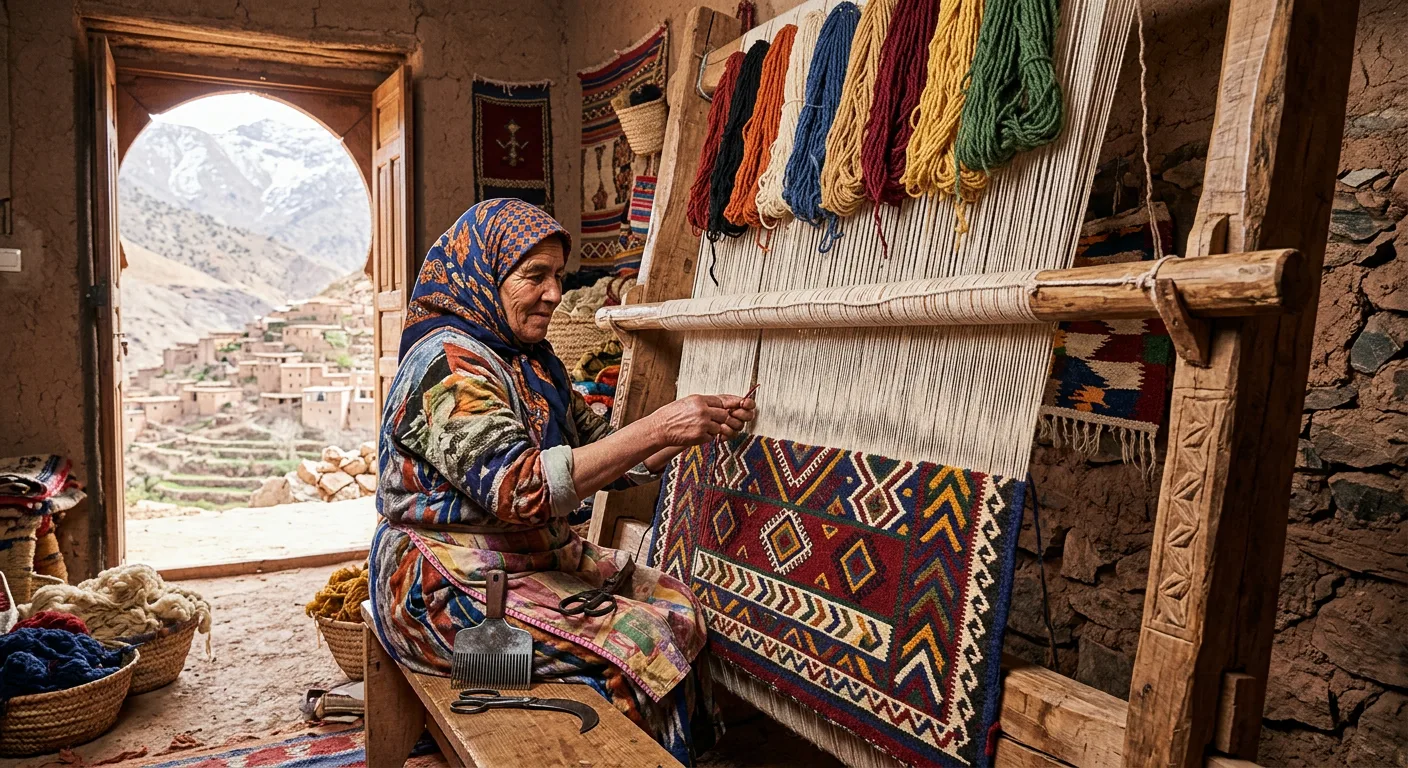
Shopping in the Rabat medina is a calmer pleasure than in the big tourist cities. The old town is small and easy to navigate behind the Andalusian Wall, the sellers are patient, and the pressure that wears people down elsewhere is largely absent. At its heart runs the Rue des Consuls, a street that has been the centre of the city's craft trade for centuries — and the place to begin.
What are the best things to buy?
The quality purchases are those tied to genuine Moroccan craft. Rabat has its own celebrated carpet tradition — the "Rabati" rug, with dense pile and bold urban patterns descended from Ottoman and Andalusian design — sold along the Rue des Consuls; a good piece runs from US$150 into the thousands depending on size and knot density. Leather goods in natural goatskin — babouches, bags, belts — are well made and well priced. Brass and copperware, hand-hammered lanterns and trays make beautiful pieces. Argan-based cosmetics and amlou are genuine when bought from a cooperative, and embroidered linens and kaftans round out the list.
Items to approach with caution: mass-produced ceramics imported and painted to look Moroccan, synthetic "leather" with a chemical smell, and "original" Berber jewellery that is actually factory white metal. The surest way to avoid these is to watch something being made before buying it.
Where should you go for each craft?
The medina's trade is easy to map. The Rue des Consuls — named for the era when foreign consuls had to live along it — is the carpet and craft spine, with a covered carpet market and open-fronted shops for leather, brass and textiles. Rue Souika is the everyday commercial street: spices, olives, fabrics and food where Rbatis actually shop, running down towards the old Mellah and the markets near the river. Scattered through the medina are certified cooperatives selling carpets and argan at fixed prices, and the lanes just below the Kasbah of the Udayas hold smaller artisan shops and silver.
How does bargaining actually work?
The medina runs on a dual-price system: an opening price and a closing price reached by negotiation. Participating respectfully is expected, and in Rabat it is relaxed and unhurried. A few principles we tell every guest:
- Start at 40–60% of the first quoted price and work up slowly.
- Never reveal your budget; let the seller make the moves first.
- Smile. Bargaining is social, not adversarial. If it sours, walk away.
- Walking away genuinely is the most effective tactic and often produces a better offer.
- Once a price is agreed, honour it — changing your mind after is considered rude.
- Fixed-price cooperatives, marked as such, are useful reference points for fair value.
How do you ship large purchases home?
Established carpet and furniture dealers have longstanding relationships with international freight agents. A rolled Rabati rug shipped to London or New York typically costs US$150–250 and arrives within two to four weeks; flat-packed lanterns and panels ship for US$80–150 a box. Always ask for a detailed receipt listing the item, dimensions, material and price, and photograph it. Antique items over 100 years old require an export declaration, which reputable dealers handle.
For smaller items, DHL and FedEx offices in the Ville Nouvelle accept packages at the counter; La Poste Maroc is cheaper but slow and best for non-fragile textiles.
Why a Rabati carpet is worth understanding
Rabat's urban carpets are a distinct tradition, historically woven by women of the city and prized for their dense knotting, central medallions and rich reds and blues — a more formal, Ottoman-influenced style than the geometric Berber rugs of the mountains. The Rue des Consuls carpet market is the place to compare them. Take your time, turn the rug over to read the back, and don't be rushed: the best dealers are happy to lay out a dozen pieces over a glass of mint tea with no obligation to buy.
How do you shop the medina with a guide?
A knowledgeable local guide changes the experience. We take guests off the main lanes into the working corners — where a craftsman is setting brass by hand, or a weaver is threading a loom — workshops that sell direct at fair prices, so you understand what you are buying. Our private medina guides are licensed and independent — they take no commission from any shop, so they take you where the quality is, not where the margin is. See our Rabat destination guide for the broader picture, or browse our private tours that include a curated medina morning.
Frequently asked
What are the best things to buy in the Rabat medina?
Rabati carpets and rugs (the city has its own celebrated weaving tradition), leather goods, hand-hammered brass and copper, embroidered linens and kaftans, babouche slippers, and argan-based cosmetics. The Rue des Consuls is the historic heart of the trade, and prices and pressure are gentler than in the big tourist medinas.
Is bargaining expected in the Rabat medina?
Yes, for craft goods — the first price is rarely final. A calm, good-humoured counter at 40–60% of the opening price is normal, settling around 60–75%. Bargaining in Rabat is relaxed and rarely tense. Certified cooperatives and the Rue Souika markets are fixed-price.
How do I avoid buying low-quality goods?
Buy from artisan cooperatives or workshops where you can watch the craft. For rugs, ask to see the knot count and feel the weight. For leather, genuine goatskin has a faint animal smell; synthetics do not. Argan cosmetic oil should be a golden-green, not pale yellow.
Can I ship large purchases from Rabat back home?
Yes. Established carpet and furniture dealers arrange international freight; expect US$150–400 for a rolled rug to Europe or North America, delivered in two to four weeks. DHL and FedEx offices in the Ville Nouvelle handle smaller parcels. Always keep a receipt listing the item, dimensions and price.
Where in Rabat should I shop for which products?
The Rue des Consuls is the carpet and craft street — the place for Rabati rugs, leather and brass. Rue Souika is the busy everyday market for spices, food and textiles. Certified cooperatives across the medina sell carpets and argan at fixed prices, and the streets below the Kasbah of the Udayas have smaller artisan shops.
Do shops in Rabat accept credit cards?
Most small stalls are cash-only. Larger shops and fixed-price cooperatives increasingly take Visa and Mastercard, sometimes with a 2–3% surcharge. Carry Moroccan dirhams for the markets; ATMs are plentiful in the Ville Nouvelle and near the medina.
Shop smarter
Let a commission-free guide lead the way.
Our medina specialists take you to the craftsmen on the Rue des Consuls, not the tourist shops — and never earn a cut from what you buy.
Request an itinerary