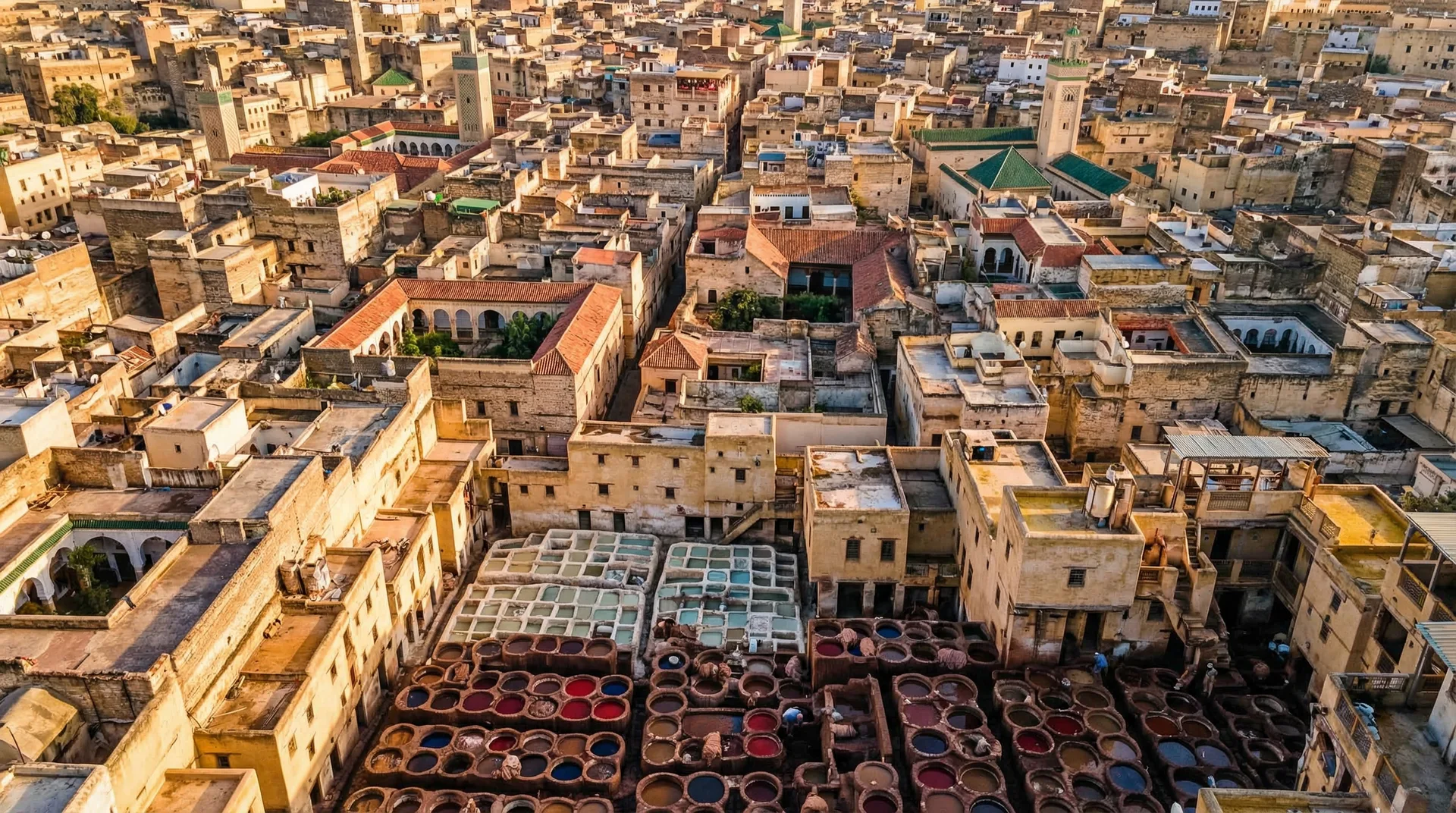
After the labyrinths of Fes and Marrakech, the Rabat medina comes as a relief. It is smaller, laid out on something close to a grid by the Andalusian refugees who built it in the 17th century, and bounded on three sides by clear landmarks — the river, the kasbah and the great Andalusian Wall. You will not get lost here, and almost nobody will pester you. That calm is the point.
You don't need a guide here
We say this plainly: unlike Fes, the Rabat medina is comfortable to explore on your own. It is compact, the main arteries are obvious, and the touting that wears people down elsewhere is largely absent. A licensed guide is worth hiring if you want the deep history — the Andalusian settlement, the corsair past, the layers of the kasbah — and we can arrange one as part of any Rabat itinerary. But for a first wander, just walk in and follow your eye.
The Rue des Consuls
The medina's most famous street takes its name from the era when foreign consuls were required to live along it. Today it is the heart of Rabat's craft trade: Rabati carpets and rugs, leather, brass and copperware, embroidered linens and babouche slippers, sold from open-fronted shops and a covered carpet market. The pace of bargaining here is gentler than in the tourist cities, and several artisan cooperatives sell at fixed prices if you would rather not haggle.
Go in the late morning when the carpet sellers have laid out their stock, and don't feel rushed — a glass of mint tea over a slow look at the rugs is part of the ritual, not an obligation to buy.
The markets of Rue Souika and the Mellah
Rue Souika is the medina's main commercial spine — a covered, bustling street of food stalls, spice sellers, olives, fabrics and everyday goods where Rbatis actually shop. It runs down towards the old Mellah, the former Jewish quarter, and the lively produce and fish markets near the river end. This is the medina at its most authentic and least curated: come hungry and curious rather than looking for souvenirs.
Stand still for a moment in the busiest section and just watch — the medina works as a neighbourhood, not a stage, and that is exactly what makes Rabat's old town a pleasure.
Walking up to the kasbah
The natural climax of any medina walk is the Kasbah of the Udayas at the top, where the river meets the Atlantic. Walk up through the old town to the great Almohad gate of Bab Oudaia, lose yourself for half an hour in the blue-and-white lanes inside, and end with mint tea on the Café Maure terrace looking out over the estuary. From the medina to the kasbah platform is a gentle 15-minute walk.
Where to stay and what to eat
Stay inside the medina or just below the kasbah in a riad — a restored courtyard house puts you within walking distance of everything and trades street noise for an inner calm. We work with a shortlist of riads where the restoration has been done with care; ask us when you enquire about a Rabat destination itinerary.
For food, Rabat is an Atlantic capital — expect excellent grilled fish and seafood alongside the classic tagines and couscous. In the medina, look for the small neighbourhood places where a set lunch (harira or a salad, a main, mint tea) costs under 80 MAD. For something special, the riad rooftops and the restaurants near the kasbah do a fine sardine or sea-bass tagine. Avoid the obvious tourist terraces and follow where the locals queue.
The best time to visit
April to June and September to November offer ideal conditions — mild Atlantic days between 20 and 26 °C, excellent light and small crowds. Rabat's summers are warm but cooled by the ocean breeze, far gentler than inland Morocco. Winter (December to February) is cool and occasionally wet, but the medina stays quiet and atmospheric, and the gardens and museums are at their most peaceful.
If you are combining Rabat with other cities, its position on the main rail line makes it an easy, restful base — see the wider Morocco destinations reachable by train.
Frequently asked
Do you need a guide for the Rabat medina?
No — Rabat's medina is one of the easiest in Morocco to explore alone. It is small, laid out on a near-grid behind the Andalusian Wall, and bounded by clear landmarks: the river, the kasbah and the Ville Nouvelle. A guide adds depth on the history but is not necessary to navigate.
Is the Rabat medina worth visiting?
Yes. It is calm, authentic and refreshingly low-pressure compared with Fes or Marrakech. The Rue des Consuls is the historic craft street; Rue Souika is a busy local market; and the whole quarter sits between the Kasbah of the Udayas and the Ville Nouvelle, making it easy to fold into a day in the capital.
How much time do you need in the Rabat medina?
Two to three hours is enough to walk the main streets, browse the Rue des Consuls, see the markets and reach the Kasbah of the Udayas at the top. Half a day lets you slow down, stop for mint tea and add a meal in a medina restaurant.
Is the Rabat medina safe?
Yes — Rabat is among the safest and least hassle-prone cities in Morocco, and the medina is comfortable to walk by day and into the evening. Touts are rare. Normal city precautions with bags in busy lanes are all that is needed.
What should you buy in the Rabat medina?
The Rue des Consuls is famous for Rabati carpets and rugs, alongside leather, brass, babouche slippers and embroidered textiles. Prices are generally calmer and the bargaining gentler than in the big tourist medinas. Fixed-price cooperatives exist if you prefer to skip haggling.
What is the best time of year to visit?
April to June and September to November are ideal — mild Atlantic days, good light and few crowds. Summer is warm but tempered by the ocean breeze, far gentler than inland Morocco. Winter is cool and quiet, occasionally wet, but the medina stays atmospheric.
Ready to explore Rabat?
We'll arrange a private guide and the right riad.
Every Rabat Tours Rabat programme includes a curated medina and kasbah day, riad accommodation chosen for restoration quality, and a local restaurant shortlist.
Request a Rabat itinerary