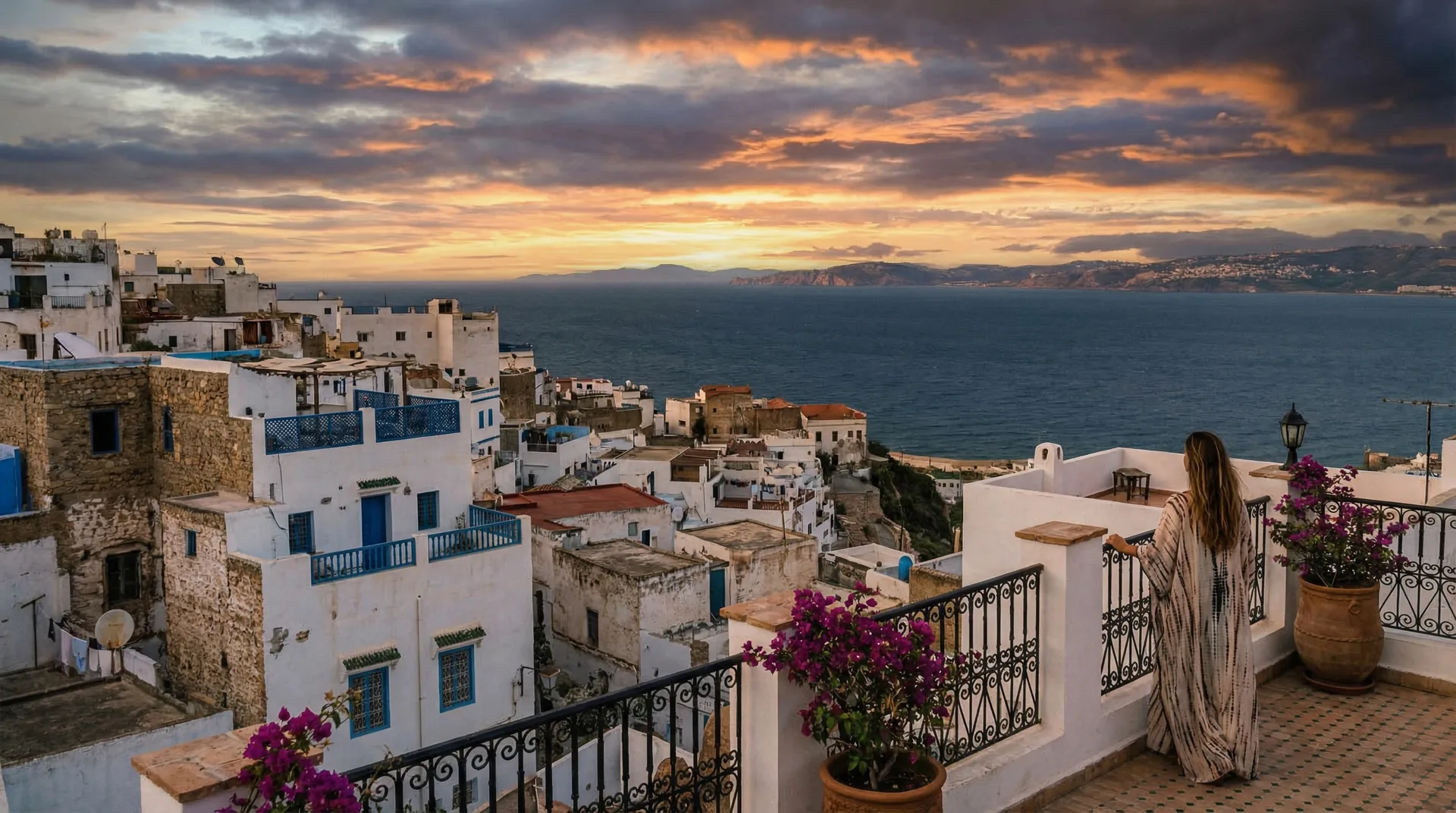
Rabat is the calm, green administrative capital — safe, walkable, and an easy rail hub, including the Al Boraq high-speed line to Casablanca and Tangier. It is markedly less touristy than Marrakech or Fes, and many travellers pass through as a relaxed one- or two-day stop. Because the city is compact, no central neighbourhood leaves you far from the monuments; choosing where to stay is really about the mood you want. Here is how the main areas differ, and who each one suits.
The Medina & Kasbah of the Udayas
The old town and the streets below the Kasbah of the Udayas are the most atmospheric place to stay, with a cluster of riads and guesthouses set in traditional courtyard houses. The kasbah itself is a small fortified quarter of blue-and-white lanes perched above the mouth of the Bou Regreg, near the river and the beach. From here you are on foot among the medina, the Rue des Consuls and the waterfront.
Who it suits: travellers who want character, walkability and to wake up inside the old town. Rabat's medina is far calmer and easier to navigate than those of Fes or Marrakech, so it is an approachable choice even for a first riad stay. Bear in mind that cars cannot reach deep into the lanes, so confirm how your property handles arrival and luggage.
Centre-ville & Hassan — the Ville Nouvelle
The French-era Ville Nouvelle, around Avenue Mohammed V and the Hassan quarter, is the city's modern, administrative heart — wide boulevards, ministries, cafés and a spread of hotels from practical to comfortable. It sits close to Rabat Ville station, the Hassan Tower and the Mausoleum of Mohammed V, and gives the easiest access of any area.
Who it suits: anyone who wants a straightforward modern hotel and a practical base, and especially those using Rabat as a rail springboard. With the station on the doorstep — and the Al Boraq line reaching Casablanca and Tangier — this is the natural choice for day trips without changing hotels. It trades old-town atmosphere for convenience and predictable comfort.
Agdal
Agdal is a modern, leafy residential district south-west of the centre, known for its café culture, restaurants and a contemporary, local feel. It carries a number of business-oriented hotels and sits a little further from the monuments and the medina, but stays calm and well-served.
Who it suits: business-leaning or longer stays, and travellers who value modern comfort, good dining and a real-neighbourhood atmosphere over proximity to the headline sights. With the tram and taxis on hand, the slightly greater distance is rarely a problem.
Across the Bou Regreg — Salé & the marina side
On the far bank of the Bou Regreg, Salé and the marina area offer a quieter, more local stay, with the chance of river views back towards Rabat's kasbah and walls. The two banks are minutes apart: the tram crosses the bridge, petit taxis are quick, and the traditional rowing boats still ferry passengers across the river mouth for a few dirhams.
Who it suits: travellers wanting peace, water views and a more everyday, less touristed setting, who do not mind a short hop to reach Rabat's monuments. Most first-time visitors still base in Rabat proper and cross to Salé for a half-day, but the marina side rewards those after calm and a different vantage on the estuary. For more on the two banks, see our Rabat vs Salé comparison.
So which area should you pick?
If you want atmosphere and to be on foot in the old town, choose the medina or kasbah. If you want a modern hotel and the easiest access to the station and monuments, choose Centre-ville / Hassan. For a calm, modern neighbourhood with good dining, choose Agdal. For quiet and river views, look across the Bou Regreg. Because Rabat is small, safe and well-connected, any of these makes a comfortable base — the difference is mood, not logistics. For practical help choosing a property within an area, see our guide to choosing a riad and our Rabat destination guide.
Frequently asked
Which Rabat neighbourhood is best for first-time visitors?
For a first visit, base yourself in the medina or on the slopes below the Kasbah of the Udayas if you want atmosphere and walkable old-town charm, or in the Centre-ville / Hassan quarter of the Ville Nouvelle if you want a modern hotel within a short walk of Rabat Ville station. Rabat is compact and very walkable, so neither choice leaves you far from the monuments.
Where should you stay in Rabat to be near the train station?
The Centre-ville and Hassan quarter — the French-era Ville Nouvelle around Avenue Mohammed V — sits closest to Rabat Ville station, which is the city's main rail hub. From here the Al Boraq high-speed line reaches Casablanca and Tangier, and the regular network serves Meknès, Fes and beyond, so a station-adjacent base is ideal if you plan day trips without changing hotels.
Is the Rabat medina a good area to stay in?
Yes. The Rabat medina is compact, calm and far less disorienting than those of Fes or Marrakech, with a cluster of riads and guesthouses and the blue-and-white lanes of the Kasbah of the Udayas at its northern edge, near the river mouth and the beach. It suits travellers who want character and to be on foot among the old town, the Rue des Consuls and the river.
Should you stay on the Salé side of the Bou Regreg?
Staying across the river in Salé or near the marina is quieter and can offer river views back towards Rabat, with the tram, a petit taxi or the traditional rowing boats linking the two banks in minutes. It is a calmer, more local choice; most first-time visitors still base in Rabat itself and cross to Salé for a half-day, but the marina side appeals to those wanting peace and water views.
Is Agdal a good area to stay in Rabat?
Agdal is a modern, leafy residential district with a strong café and dining scene and several business-oriented hotels. It is further from the monuments and the medina but calm, well-served and practical, suiting business-leaning or longer stays, or travellers who value contemporary comfort and a local neighbourhood feel over old-town atmosphere.
How many nights do you need in Rabat?
Many travellers treat Rabat as a calm one-to-two-day stop, which is enough to see the Kasbah of the Udayas, Hassan Tower and the Mausoleum of Mohammed V, the Chellah and the medina. Because the city is a safe, walkable, well-connected rail hub, others base here longer and take day trips along the line — in which case a station-adjacent or central area pays off.
Pick the right base
We'll match you to the right area, not just an available room.
Tell us how you want your Rabat days to feel — old-town atmosphere, station convenience, modern calm or river views — and Rabat Tours will place you in the neighbourhood that fits and arrange the transfers around it.
Request an itinerary