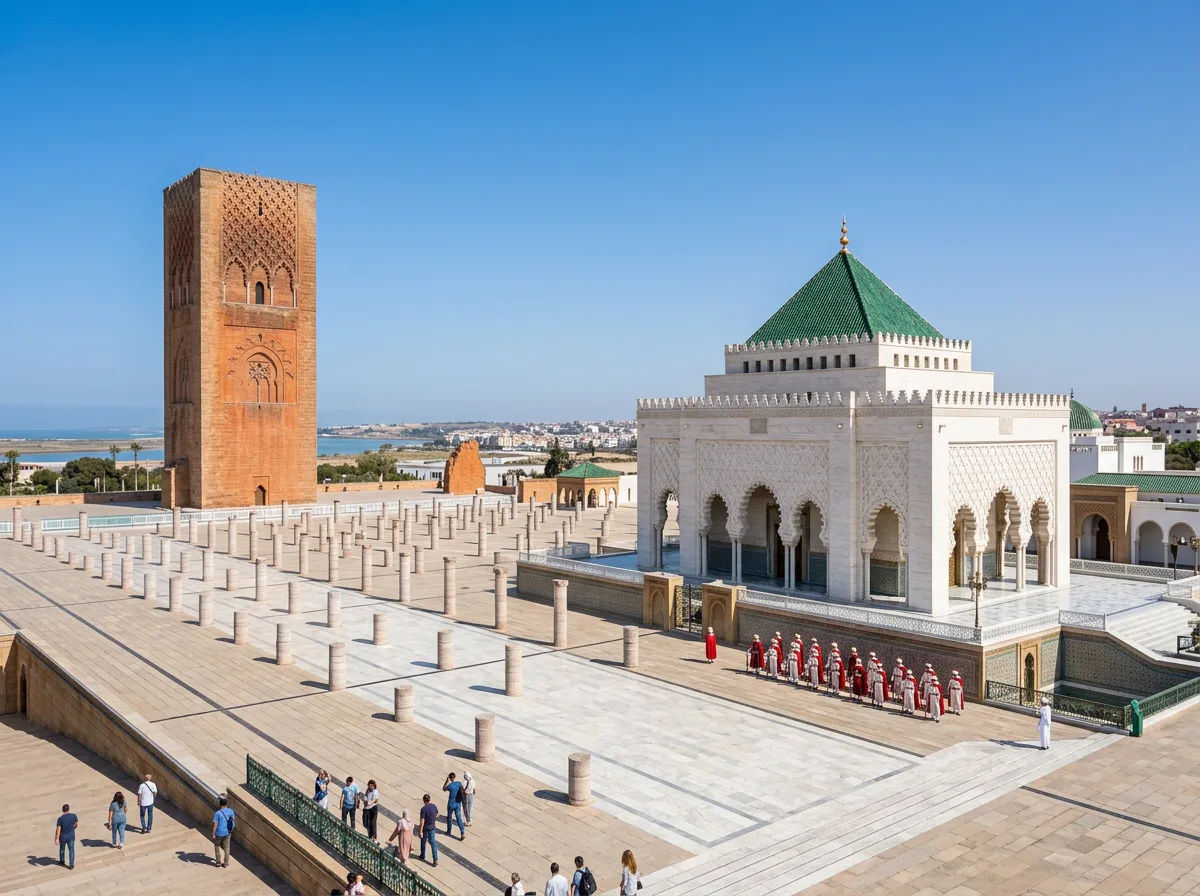
Where you stay shapes a Rabat trip more than any single sight. The capital offers a genuine choice the heavy-tourism cities do not always make easy: an atmospheric riad in the old town, or a comfortable modern hotel steps from the train station. Knowing the difference — and the neighbourhoods — saves both money and disappointment.
What makes a riad a riad?
A true riad is a townhouse organised around an interior courtyard — the wast al-dar — typically with a central fountain or small pool, citrus trees, and rooms arranged on two or three storeys around the central void. Light falls from above; the street façade is plain plaster. Everything beautiful is hidden inside.
This inward architecture was deliberate: riads were private family homes where the courtyard gave air, greenery and a social heart. In Rabat the loveliest examples cluster in the medina and on the slopes below the Kasbah of the Udayas, many showing Andalusian details — hand-cut zellij tilework, carved plaster stucco, painted cedar ceilings — brought by the refugees who built this quarter.
Many modern 'riads' are newly built or guesthouses that adopted the courtyard format without the historic fabric. They can be excellent, but they are a different experience. If a genuinely old riad matters to you, ask the property about its history and look for thick walls, original tiling and hand-carved woodwork.
Which neighbourhood suits which traveller?
Rabat is compact, so even the "far" areas are close. The meaningful differences:
- The medina & below the Kasbah of the Udayas: the most atmospheric choice, with the best riads, within walking distance of the old town, the Rue des Consuls and the river. Best for those who want immersion and character.
- The Hassan quarter: central and well connected, close to the Hassan Tower and the train station, with a mix of riads and hotels. A good all-round base.
- Ville Nouvelle (around Avenue Mohammed V): modern hotels, cafés and restaurants, steps from Rabat Ville station — ideal if you are using the city as a train base for day trips and want convenience over courtyard charm.
- Agdal: quiet, leafy and residential, further from the sights but calm and well-priced. Suits longer or business-leaning stays with their own transport.
What should you look for in a riad?
Beyond aesthetics, these are the questions worth asking before booking:
- Is it owner-managed or agent-managed? Owner-present riads tend to have better service, more personal recommendations and stronger upkeep.
- How many rooms? Under ten is intimate; above fifteen feels hotel-like. For privacy, ask about exclusive-use buy-outs.
- Is there a roof terrace? In Rabat, a terrace with a view to the kasbah or the river is a real bonus and a calm retreat from the lanes.
- Heating and the Atlantic damp: Rabat's riads stay cool by design, which is welcome in summer but can feel chilly on a wet winter night — confirm heating.
- Does breakfast look genuinely Moroccan? A photo of the breakfast table tells you much about the hospitality. Look for msemen, khobz, argan oil, amlou and fresh orange juice — not just croissants and jam.
- What is the transfer arrangement? Riads deep in the medina are not reachable by car; a good property meets you at a nearby landmark or sends a porter.
Where to book and how to avoid disappointment
Booking directly with the riad — by email or WhatsApp — often beats third-party platforms on rate and gives you a direct line to the team. It also lets you ask the questions above and judge the quality of the reply.
When reading reviews, weight those from travellers with priorities like yours. Look specifically for comments on noise, breakfast quality, staff helpfulness and how problems were handled — these reveal more than praise about the décor.
If you'd rather not research alone, we work with a curated selection of Rabat riads and hotels across price points that we've personally visited and vetted. We match you to the right property by dates, group size and what matters to you, then arrange all transfers as part of a wider itinerary. See our Rabat destination guide and private tour options for more.
Frequently asked
What exactly is a riad, and how is it different from a hotel?
A riad (from the Arabic 'riyadh', meaning garden) is a traditional Moroccan townhouse built around a central interior courtyard, often with a fountain and citrus trees. Unlike an anonymous hotel, a riad is intimate — typically 5 to 15 rooms — with shared courtyards, a resident cook and staff who know your name. The architecture is inward-facing: plain walls on the street, beauty hidden within. In Rabat, many sit in the medina or just below the Kasbah of the Udayas.
Where should you stay in Rabat?
For atmosphere and walkability, the medina and the streets below the Kasbah of the Udayas put you within reach of the old town, the Rue des Consuls and the river. The Hassan quarter and the Ville Nouvelle around Avenue Mohammed V suit travellers who want a modern hotel near the train station. Agdal is quiet and residential. Rabat is compact, so nowhere central is far from anything.
How do I find a good riad in Rabat without relying on a famous name?
Look for owner-managed riads that reply in a personal voice rather than corporate hotel-speak. Check that photos show the actual courtyard and rooms. Ask whether the property is let to multiple groups at once or reserved for your party. Reviews that mention the host by name are the strongest sign of a genuinely run riad.
What should a riad breakfast include?
A proper Moroccan riad breakfast is a highlight: msemen or beghrir (semolina pancakes), khobz (flatbread), argan oil and amlou (almond-argan paste), local honey, fresh orange juice, and mint tea or coffee. If a riad offers only toast and continental items it is cutting corners; a full Moroccan spread is the standard worth holding out for.
Is it safe to stay in the Rabat medina?
Completely. Rabat is among the calmest, lowest-hassle cities in Morocco, and the medina is compact and easy to walk by day and into the evening. The lanes are far less disorienting than those of Fes or Marrakech. Arrange your station or airport transfer through the riad; they will meet you or send a contact if needed.
How far in advance should I book a riad in Rabat?
Rabat rarely sells out the way Marrakech does, but the best small riads still fill in peak season (spring and autumn) and around major events such as the Mawazine festival. Two to four weeks' notice is usually enough; for a private buy-out of a small riad, plan a few months ahead for peak dates.
Accommodation we trust
We'll place you in a riad that fits, not just one with availability.
Every property we recommend in Rabat has been visited by our team. We know which riads are genuinely quiet, which kitchens are excellent, which hosts go beyond the expected. Tell us your preferences and we'll match you accordingly.
Request an itinerary