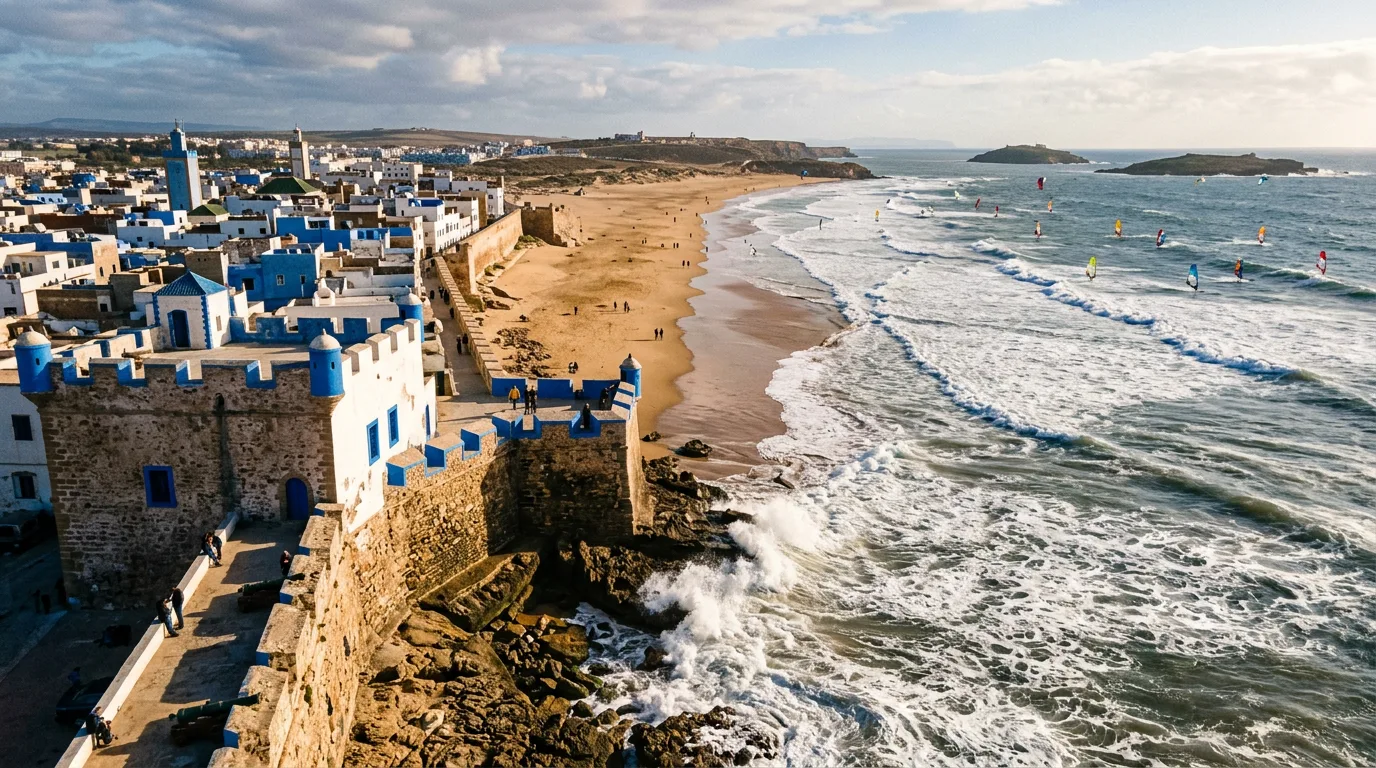
There is no genuinely bad time to visit Rabat. Sitting where the Bouregreg meets the Atlantic, Morocco's capital enjoys a mild, ocean-moderated climate that softens the extremes felt inland: summers are cooler than Marrakech, winters are gentler than the mountains, and the sea breeze is rarely far away. The question is less whether to go and more which Rabat you want — the green, quiet capital of winter, the bright warmth of spring, or the long beach evenings of summer. The figures below are typical, approximate norms rather than forecasts, so treat them as a guide and always check a current forecast before you pack.
The short answer
For most travellers, April to June and September to October are the best windows: warm, largely dry, comfortable for walking, with long daylight and pleasant evenings. July and August are warm but ocean-cooled and very liveable, ideal if you want the coast. December to February are the mildest, greenest and quietest months — also the wettest — and reward anyone happy to trade a little rain for low crowds and the lowest prices.
Rabat's climate in brief
Rabat has an Atlantic-Mediterranean climate. The defining feature is the ocean, which acts as a year-round thermostat: it keeps summer highs in check and stops winter from ever turning truly cold. Rain is concentrated in the cooler half of the year, roughly November through March, and arrives as showers and passing fronts rather than long monsoonal spells. Summers are largely dry and sunny. The city itself is green, flat and walkable, with gardens, a riverside promenade and a compact medina — which means the weather shapes how you spend the day more than whether you can go out at all.
Month by month
January
The coolest, quietest month. Expect mild days and cooler, sometimes wet evenings — broadly in the range of roughly 8–17°C — with green parks and gardens after the rains. It is a fine time for the museums, the monuments and unhurried medina wandering, with few other visitors. Pack a warm layer and a light waterproof.
February
Similar to January but with the first hints of the turn towards spring. Still cool and occasionally rainy, still green, still quiet. Good value, easy to get into riads and restaurants, and pleasant for a midday river walk between showers.
March
Spring begins to assert itself. Days lengthen and warm, the city is at its greenest, and rain eases as the month goes on. A lovely, under-rated time to visit — comfortable for sightseeing and noticeably calmer than the high season that follows.
April
One of the best months. Warm, increasingly dry days, clear Atlantic light and gardens in full colour, with comfortable temperatures for walking the kasbah, Chellah and the medina. Evenings are mild. If you want Rabat at its most photogenic and least taxing, this is it.
May
Spring at its peak: warm, dry and reliably pleasant, with long daylight and gentle evenings. Excellent for combining Rabat with the rest of Morocco, since the coast stays comfortable while the interior begins to heat up.
June
Warm and dry, with the swimming season opening along the coast. The ocean keeps the heat moderate compared with inland cities, and long evenings make this a fine month for the riverside and beach. Still ahead of the busiest summer weeks.
July
High summer, but the Atlantic version of it. Daytime highs typically sit around the mid-to-high twenties Celsius — roughly 17–27°C across the day — often freshened by a sea breeze, which makes Rabat markedly more comfortable than Marrakech or Fes. Warm sunny days, busy beaches and lively evenings.
August
Much like July: warm, dry and ocean-cooled, the heart of the beach season. Busier with holidaymakers, especially at weekends, but the climate stays comfortable. Evenings out along the water are one of the season's pleasures.
September
Arguably the finest month of all. The warmth of summer lingers, the sea is at its most swimmable, the crowds thin and the light turns golden. Calm, warm and dry — a near-perfect balance for the capital.
October
Autumn proper, and still excellent. Warm, settled days, comfortable evenings and the first occasional showers towards month's end. Ideal for sightseeing and for pairing Rabat with a wider Morocco itinerary as the interior cools.
November
The shoulder into winter. Milder, cooler and wetter than October, with the city greening up again after the first proper rains. Quieter and good value, with pleasant days between the showers — a fine time for the museums, monuments and a relaxed pace.
December
Mild and often wet, but never harsh — the ocean keeps the chill off. The quietest, greenest time, with the lowest prices and the smallest crowds. Bring a warm layer and a waterproof, and enjoy a calm, low-hassle capital at its most local.
Choosing your season
If your priority is comfortable sightseeing and the best light, aim for April to June or September to October. If you want the beach and the coast, come in the broad June-to-September window, remembering that the Atlantic stays cool and breezy even in high summer, so it suits beach walks and short swims more than long ones. If you value quiet and value, the winter months from December to February deliver the greenest, calmest, cheapest capital — at the cost of some rain and shorter days. Whatever you choose, Rabat's small, walkable scale means a wet morning is easily filled with museums, cafés and the medina, and a clear afternoon with the kasbah, the monuments and the river.
A note on Ramadan
One date worth checking, whatever the season, is Ramadan. During the holy month the rhythm of the day shifts — some cafés and restaurants keep reduced daytime hours, the city is quieter by day and comes alive after sunset, when families break the fast together. It can be a genuinely rewarding time to visit if you are flexible and curious, but it changes how the practical day unfolds. Because Ramadan moves earlier each year on the lunar calendar, always check when it falls for your travel dates and plan meals and visits accordingly. For more on this, see our Rabat festivals calendar.
Frequently asked
What is the best time of year to visit Rabat?
For most travellers the sweet spots are April to June and September to October. Spring brings warm, dry, comfortable days and a green city; early autumn keeps the warmth without the peak-summer crowds. Both seasons give you mild Atlantic weather, long daylight and pleasant evenings for walking the medina and the riverside.
Is Rabat hot in summer?
Less than you might expect. Rabat sits on the Atlantic, and the ocean keeps summer noticeably cooler than inland cities like Marrakech or Fes. Typical July and August daytime highs sit roughly in the mid-to-high twenties Celsius, often with a fresh sea breeze. It is warm and sunny rather than punishing, which is one of the capital's quiet advantages.
When does it rain in Rabat?
Most rain falls in the cooler months, roughly November through March, with December to February usually the wettest. It tends to come as showers and passing fronts rather than constant downpours, and the city turns green afterwards. Summers are generally dry. These are typical patterns, not guarantees — always check a current forecast before you pack.
Can you swim in Rabat?
There is a swimming season, broadly June to September, when the air is warm and beaches around Rabat and Salé are busiest. Bear in mind the water is the Atlantic, so it stays cool and can be breezy and choppy even in high summer. Many visitors enjoy the beach and the coastal walk more than long swims; check local conditions and flags before going in.
Is winter a bad time to visit Rabat?
Not at all — just different. Winters are mild by European standards, with cool, sometimes wet days and green surroundings. It is the quietest season, good for museums, gardens, the monuments and unhurried medina wandering, with the best prices and smallest crowds. Pack a light waterproof and a warm layer for the evenings.
Should I avoid Ramadan when visiting Rabat?
You do not need to avoid it, but it is worth planning around. During Ramadan the rhythm of the day shifts: some cafés and restaurants keep reduced daytime hours and the city is quieter by day and livelier after sunset. It can be a rewarding, atmospheric time to visit if you are flexible. The dates move each year on the lunar calendar, so check when it falls for your trip.
Plan around the seasons
Tell us when you can travel and we'll shape the trip around it.
Whether you're chasing spring light, a summer on the coast or a quiet green winter, we build Rabat into your Morocco itinerary with the right riad, the right pace and honest seasonal advice. Share your dates and we'll do the rest.
Plan your Rabat stay