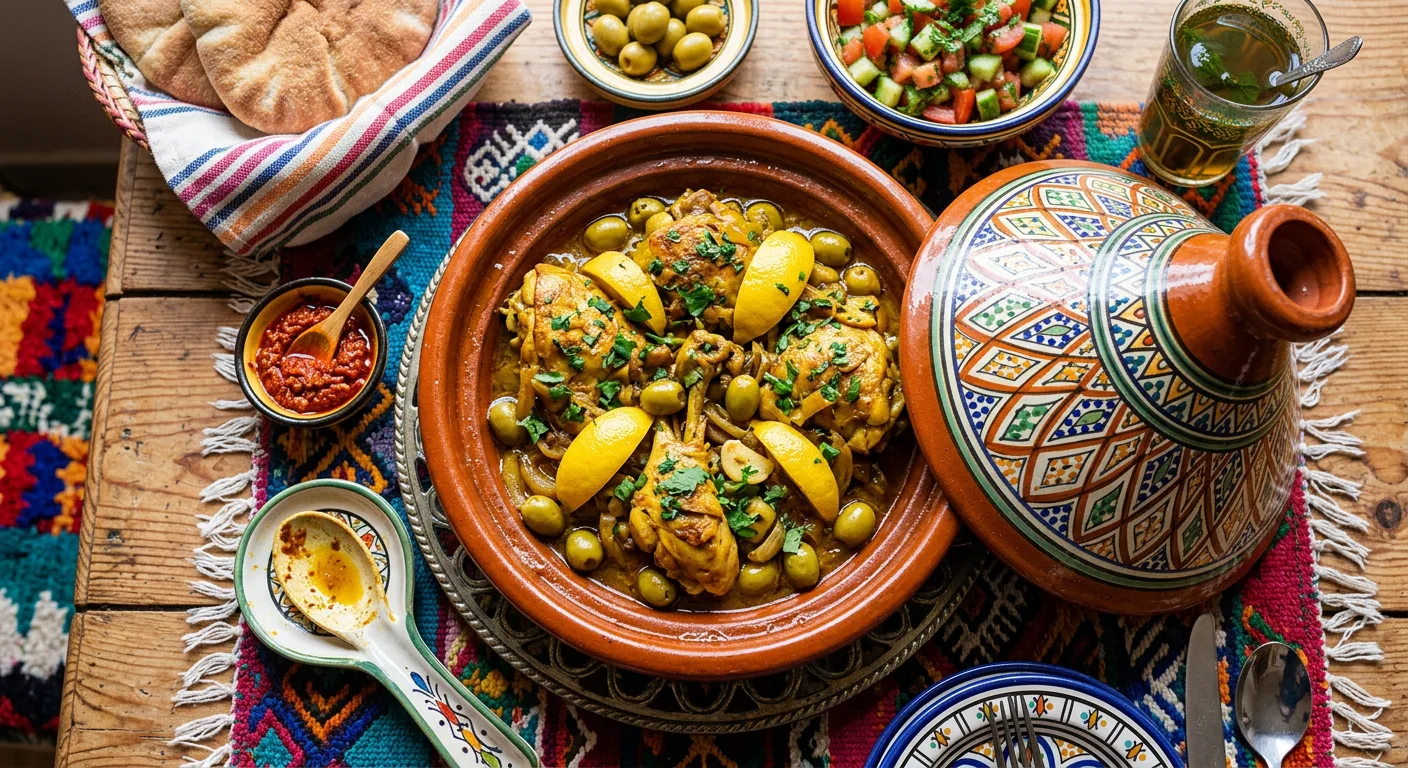
Every visitor to Morocco eats a tagine within the first two hours. The clay pot, the conical lid, the steam of saffron and preserved lemon — it is delicious, and worth it. But in Rabat, treating the tagine as the whole story misses the point of being on the ocean. This is an Atlantic city, and the rest of the table looks like this.
The tagine, properly understood
The word tagine refers both to the pot and the dish cooked in it. The conical lid traps steam and returns it as condensation, a slow-braising technique that turns cheaper cuts extraordinarily tender. In Rabat the version to seek out is the fish tagine — sea bass or sardines layered with chermoula, tomato, peppers and preserved lemon — alongside the classic chicken with olives and lemon.
The best tagines are not always in restaurants. Ask your guide to take you to a neighbourhood place where the pots have been on low heat since morning, or arrange through us a cooking experience in a riad kitchen.
Atlantic seafood — Rabat's real strength
Rabat and Salé face the ocean, and seafood is where the city shines. Sardines split and grilled over charcoal, sea bass baked whole, sole, prawns and calamari come straight from the markets near the river and the fishing port at Salé. The Rabati way is simple — fresh fish, charcoal, a squeeze of lemon, perhaps chermoula — and it is some of the best eating in Morocco. Look for the small fish grills near the medina and the port rather than the obvious tourist terraces.
Pastilla and the sweet-savoury tradition
Pastilla is Morocco's celebratory dish: a paper-thin warqa pastry around braised pigeon (or chicken), egg, saffron and coriander, then dusted with icing sugar and cinnamon. Sweet and savoury together, in a flaky shell. Rabat's riads make an excellent version for special dinners, and a seafood pastilla — built around fish and prawns — turns up on the coast and is well worth seeking out.
Couscous — the Friday ritual
Couscous is the dish Moroccan families gather around on Friday after the midday prayer. It is domestic, maternal and communal rather than a restaurant staple. The semolina is steamed three times over a vegetable broth, then piled in a dome and dressed with slow-cooked vegetables and a choice of lamb, chicken or just vegetables. Rabat restaurants serve it on Fridays and Saturdays; if you are there on those days, order it.
Street food worth stopping for
The Rabat medina along Rue Souika is the place to graze. In the morning, msemen and harcha (flaky and semolina griddle breads) with argan honey or cheese; at lunch, grilled brochettes, kefta and sardine sandwiches; and fresh-pressed orange juice all day. In the cooler months, look for the snail-broth carts — a cumin-spiked cup you eat standing up.
Across the river in Salé, the working port fries and grills the morning's catch, and the old medina has its own quieter food streets. Both are easy add-ons to a day in the capital.
Vegetarian and vegan eating in Rabat
Moroccan cuisine is generous to non-meat eaters, though veganism is not widely understood and needs specific explanation. The salad starters — zaalouk (smoked aubergine and tomato), taktouka (roasted pepper and tomato), carrot with cumin, beetroot with chermoula — are plant-based and arrive automatically at a traditional restaurant. A plain vegetable tagine is available everywhere. Vegans should ask about smen (aged butter) and note that starters sometimes contain egg.
Cooking classes and private kitchens
A half-day cooking class is one of the best single experiences Rabat offers. The format we prefer begins with a guided market walk on Rue Souika to source the ingredients — and to choose the fish — then a session in a riad kitchen learning to make two or three dishes. You eat what you make, with mint tea. We include this in our cultural tours and can arrange it as a standalone for independent guests.
What to drink
Morocco is a Muslim country; alcohol is available in licensed restaurants and hotels but not universally. The default drink is atay — mint tea poured from a height to create froth, taken three glasses in succession. Fresh orange juice, almond milk and avocado smoothies are popular alternatives. Tap water is treated but variable; we advise guests to use bottled water throughout.
Frequently asked
Is the food in Rabat spicy?
Moroccan cuisine is aromatic rather than hot. Ras el hanout, cumin, saffron, chermoula and preserved lemon dominate. Harissa is offered on the side, never built into the dish. As an Atlantic capital, Rabat leans on fresh fish and seafood, which are simply grilled or baked rather than heavily spiced.
What seafood should I try in Rabat?
Rabat and its twin Salé sit on the Atlantic, so seafood is a highlight: grilled sardines, sea bass, sole, prawns, and a Rabati fish tagine cooked with chermoula, tomato and peppers. The fish markets near the river and the port at Salé supply the city's restaurants daily.
What should vegetarians and vegans order in Rabat?
Rabat is generous to vegetarians. Zaalouk (smoky aubergine and tomato), taktouka (roasted pepper salad), bissara (dried fava bean soup with cumin and olive oil) and a plain vegetable tagine are all widely available. Vegans should ask about smen (aged butter), sometimes used in cooking.
Where do you find good street food in Rabat?
The medina along Rue Souika is the place: msemen and harcha griddle breads in the morning, grilled brochettes and sardine sandwiches at lunch, fresh-pressed juice, and snail broth in cooler months. The cafés along the Bouregreg and near the kasbah serve sweet pastries with mint tea.
Can you do a cooking class in Rabat?
Yes — a half-day class that starts with a market walk on Rue Souika and continues in a riad kitchen is one of the best single experiences in the capital. You source ingredients, cook two or three dishes, and eat what you make. We include this option in several itineraries.
Is tap water safe to drink in Rabat?
Tap water in Rabat is treated, but quality varies and we advise guests to use bottled water for drinking and cleaning teeth. Restaurants cook with tap water without issue. Ice in established restaurants is fine; be cautious with ice at informal stalls.
Eat well in Rabat
We'll build a culinary thread through your itinerary.
From a Rue Souika market walk to a private riad cookery class with the day's catch, Rabat Tours weaves the best of Rabat's food into every programme — including dietary accommodations arranged in advance.
Enquire about a culinary itinerary