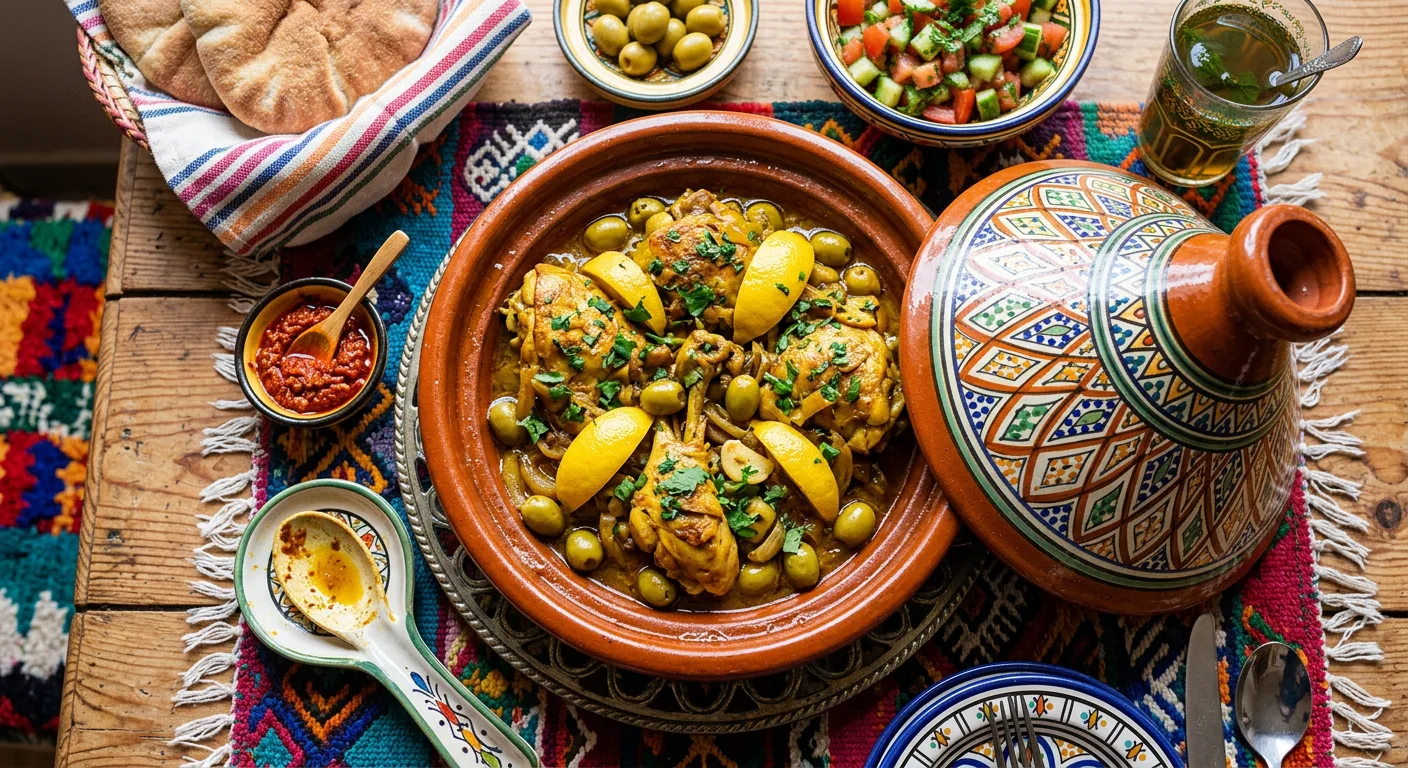
Rabat's kitchen is not what most visitors expect. The tagine and couscous you know from restaurants abroad are real — but here they share the table with the Atlantic: sardines grilled over charcoal, sea bass baked whole, a fish tagine bright with chermoula. Add a bread culture so embedded that bakeries stay open late, and you have a capital that eats very well. Here is where to begin.
The dishes worth seeking out
The Rabati fish tagine is the dish that places you on the coast — fresh sea bass or sardines layered with chermoula (a marinade of coriander, cumin, garlic and lemon), tomato, peppers and preserved lemon, slow-cooked in the clay pot. Simple, fragrant and unmistakably Atlantic.
Pastilla (b'stilla) is the dish most often described as a revelation: a round pie of wafer-thin warka pastry filled with braised pigeon (or chicken) shredded with egg, cinnamon and almonds, dusted with icing sugar. The sweet-savoury combination is deeply Andalusian — fitting in a city built by Andalusian refugees. It is celebratory food and the test of a serious kitchen.
Mechoui — lamb slow-roasted in a clay oven until it falls from the bone — is sold by weight in dedicated mechoui houses, eaten with your hands and cumin salt. It is one of the most satisfying meals in Morocco. Our guides know exactly where to go.
Street food on Rue Souika
The medina's main commercial street is Rabat's best grazing ground. Through the day you'll find grilled kefta (minced lamb with parsley and cumin) and brochettes, msemen and harcha griddle breads, sardine sandwiches and fresh-pressed juice. Order directly and at an agreed price and the food — cooked over charcoal with high turnover — is genuinely good and very cheap.
In cooler months, look for the snail-broth carts (a cumin-spiked cup) and makouda (potato fritters) — the local quick snacks. Across the river, the port at Salé fries and grills the morning's catch.
Medina restaurants and the riad dinner
The best sit-down restaurants cluster in the medina and along the Rue des Consuls, with a second pole of cosmopolitan dining in the Ville Nouvelle around Avenue Mohammed V. Look for places without a menu-photo display at the door — often a sign of a kitchen confident in its food rather than reliant on tourist pass-through.
The riad dinner is a different experience entirely. Many riads offer a set evening meal cooked by their own team — often a local woman who has been cooking these dishes her whole life. The quality is frequently higher than any restaurant: proper harira, real hand-rolled couscous and a tagine simmering since noon. Always book in advance. We include riad dinners in all private itineraries.
Bread, olive oil and argan
Bread in Morocco is a staple treated with respect — leftover bread is not discarded but set aside for those who need it. The medina's communal ferran (wood-fired oven) is still used by families who bring their morning dough to be baked; your guide can take you.
Culinary argan oil — pressed from roasted argan nuts — has a deep, nutty flavour, excellent on fresh bread or couscous. The best version is amlou: a paste of argan oil, almonds and honey eaten at breakfast like a Moroccan peanut butter. Buy from a women's cooperative or a reputable grocer; quality from street sellers is variable.
Drinks: mint tea, coffee and juice
Moroccan atay (mint tea) is gunpowder green tea steeped with fresh spearmint and sugar, poured from height to aerate it. Accepting tea is a social act. In the cafés along the Bouregreg and on Rue des Consuls, a glass costs 5–10 MAD and buys you a table for as long as you like.
Fresh juice — orange, pomegranate, avocado — runs 8–15 MAD a glass. Morocco is largely dry; alcohol is served in tourist restaurants and hotels but not in local medina cafés. Read our full Rabat destination guide.
Frequently asked
What is the must-eat dish in Rabat?
A Rabati fish tagine — sea bass or sardines with chermoula, tomato and preserved lemon — is the dish that says you are eating on the Atlantic. Beyond that, pastilla (flaky pastry of pigeon or chicken with almonds, egg and icing sugar) is the dish guests most often describe as a revelation.
Where is the best street food in Rabat?
The medina along Rue Souika is the place: grilled brochettes and kefta, sardine sandwiches, msemen and harcha griddle breads, snail broth in winter and fresh-pressed juice. Food is cooked to order with high turnover. Agree on a price before ordering and you will eat very well, very cheaply.
What are the best areas to eat in Rabat?
The medina and Rue des Consuls for traditional food and riad dinners; the seafront and the streets near the kasbah for grilled fish; the Ville Nouvelle around Avenue Mohammed V and the Hassan quarter for cosmopolitan restaurants and cafés; and across the river in Salé for the working port grills.
Are there good vegetarian options in Rabat?
Yes — Moroccan cuisine is naturally vegetable-forward. Zaalouk (smoked aubergine), taktouka (tomato and pepper salad), bissara (dried broad bean soup) and the meze-style 'salade marocaine' spread are all vegetarian. Vegetable tagines are available everywhere.
What is argan oil and should you buy it in Rabat?
Argan oil is pressed from the nut of the argan tree, native to south-western Morocco. Culinary (roasted) argan oil has a rich, nutty flavour for couscous and bread; cosmetic (unroasted) oil is for skin and hair. Buy from certified cooperative shops in the medina or reputable grocers rather than street sellers — quality and price vary widely.
When should you eat in Rabat — are restaurant hours different from Europe?
Moroccan meal times skew later. Lunch runs 12:30–3 pm; dinner from 8 pm, with locals often eating at 9 or 10 pm. Many riads serve dinner by reservation only. During Ramadan, restaurants close until iftar (sunset) and then fill instantly — book ahead.
Eat like you live here
Our private food tours go beyond restaurants — into the markets, the riads and the ferran.
Rabat Tours curates half-day and full-day food experiences in Rabat for guests who want to understand what they are eating, not just photograph it.
Enquire about a food experience